
6 Best Flight Cages of 2026 – Expert Picks
Your birds need a safe, roomy environment to thrive. Our 2026 roundup of the best flight cages identifies top-rated models that provide the space and durability your flock requires.
 By Pets Viora Editorial Team
Updated October 2, 2026
Finding the Perfect Home for Your Birds: The Ultimate Best Flight Cages Guide for 2026
Choosing the right flight cage is one of the most important decisions you can make for your pet birds. A proper cage isn’t just a container; it’s their home, their playground, and their sanctuary. The best flight cages provides ample space for flying and exercise, ensures safety and security, and makes daily care manageable for you. In November 2026, the market offers a variety of excellent options, but navigating the differences in size, design, and features can be overwhelming. That’s why our team has done the research for you.
We’ve analyzed 6 of the top-rated best flight cages models available, comparing specifications, safety features, and real-world feedback from bird owners. Our goal is to help you find a cage that suits both your birds’ needs and your lifestyle, whether you have a single cockatiel or a small flock of finches. For more insights on creating a great environment for your pets, explore our Birds category for additional resources and guides.
| Award | Product | Viora Score About Viora ScoreThe Viora Score is our own 0–10 rating based on performance, safety, durability, pet comfort, and value. It reflects independent research and is never influenced by brands or affiliate commissions. Learn more › | |
|---|---|---|---|
| Best Overall |
 Yaheetech 60.5-Inch Extra Large Rolling Bird Cage |
8.8/10 | Buy |
| Best Value |
 VIVOHOME VH843 54-Inch Bird Flight Cage |
8.4/10 | Buy |
 A&E Cage Co 503 24-Inch Flight Bird Cage |
Buy | ||
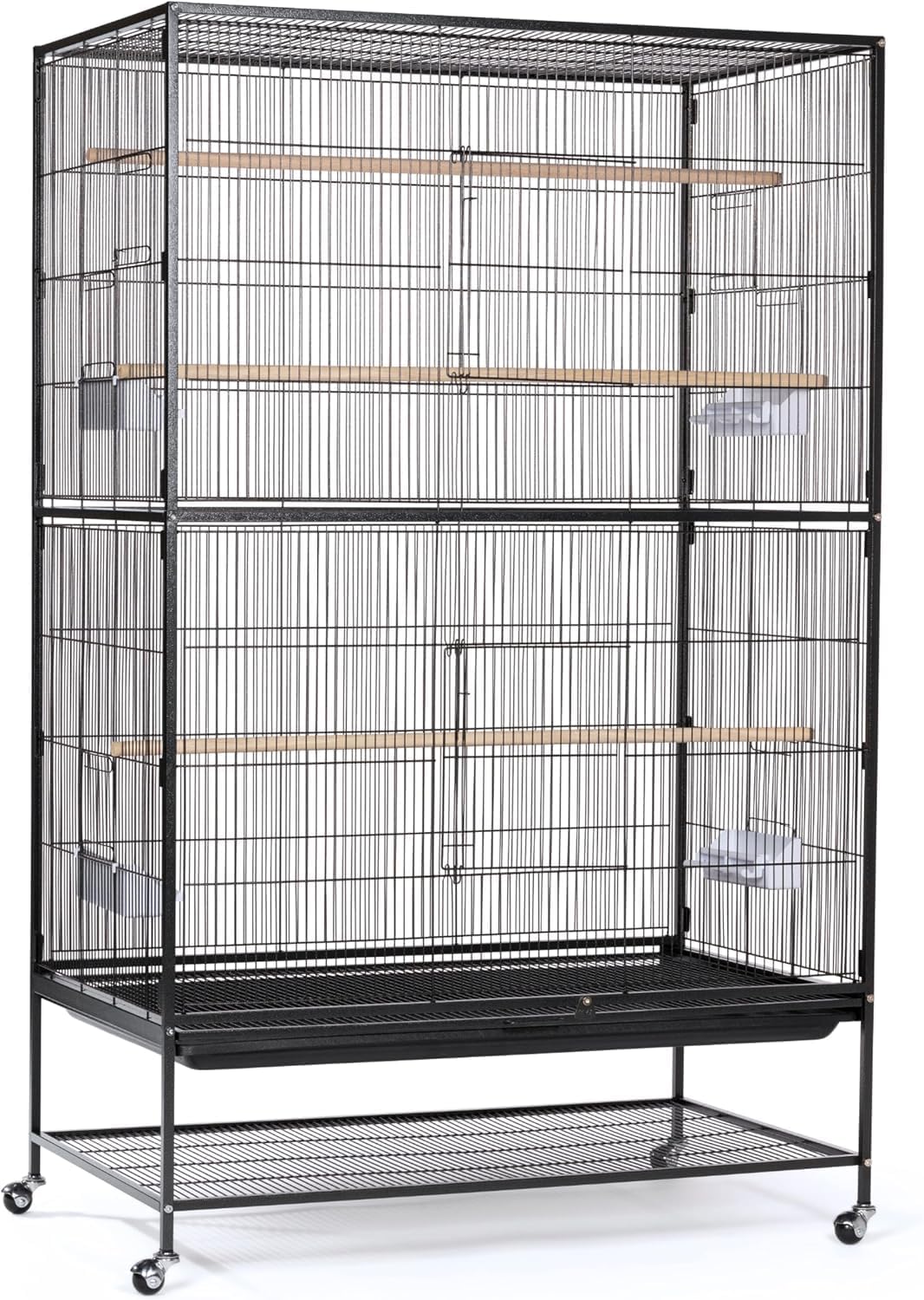 Prevue F050 Extra-Large Flight Cage |
Buy | ||
 VEVOR 504CD 30-Inch Stackable Flight Bird Cage |
Buy | ||
| Best Budget |
 VEVOR Model 60 Bird Flight Cage |
8.3/10 | Buy |
Yaheetech 60.5-Inch Extra Large Rolling Bird Cage
This extra-large flight cage offers substantial space for a small flock, with its 37-inch length and wheels for mobility. Its design is straightforward, including essential perches and feeders, making it a functional habitat for medium birds like cockatiels and conures.
Pros
- Spacious interior suitable for up to 10-12 small/medium birds
- Features wheels for easy relocation and cleaning
- Includes four wooden dowel perches and four feeders
- Large front doors with locks for convenient access
- Made with coated metal for durability and easy maintenance
Cons
- Assembly is required
- Includes basic dowel perches which may not be ideal for all birds' foot health
VIVOHOME VH843 54-Inch Bird Flight Cage
This large flight cage with a rolling stand offers a spacious and functional habitat for medium to large birds like parakeets, cockatiels, and conures. Its durable steel construction and easy-clean slide-out tray simplify maintenance, while the flat top provides space for toys or plants.
Pros
- Spacious 54-inch height suitable for flight and activity
- Sturdy alloy steel frame with non-toxic, corrosion-resistant paint
- Four universal casters for easy mobility
- Slide-out bottom tray and removable shelves simplify cleaning
- Includes useful accessories like feeding cups and perches
Cons
- Single-door design may limit access for cleaning or arranging interior items
- Heavy at nearly 26 pounds, which can make initial placement difficult despite casters
A&E Cage Co 503 24-Inch Flight Bird Cage
This compact flight cage offers a secure and spacious environment for small birds like finches and parakeets. Its thoughtful design includes dedicated feeder doors and a slide-out tray for easy maintenance, making it a practical habitat choice.
Pros
- Ample 24-inch length provides good movement space for small birds
- Secure 1/2-inch bar spacing and mixed bar orientation for climbing
- Convenient feeder stations allow refills without opening the main door
- Slide-out plastic tray and top handle simplify cleaning and transport
- Manufactured by a well-established, trusted brand in bird cages
Cons
- Single-level design may limit enrichment options compared to multi-level cages
- Plastic components in feeder stations may be less durable than metal over time
Prevue F050 Extra-Large Flight Cage
This wrought iron cage provides a substantial flying space for small to medium birds. Its multiple doors, wheels, and pull-out tray are designed for convenience.
Pros
- Very spacious interior for multiple small birds
- Rolling casters for easy mobility
- Multiple access doors simplify feeding and cleaning
Cons
- Heavier construction may be difficult to move on some surfaces
- Assembly is required
VEVOR 504CD 30-Inch Stackable Flight Bird Cage
This stackable flight cage offers a generous interior for small birds to move and stretch. Its carbon steel construction and secure door design aim for durability and safety, while features like a slide-out tray simplify maintenance.
Pros
- Spacious interior suitable for small birds like cockatiels and budgies.
- Constructed from sturdy, high-strength carbon steel.
- Features a secure door to prevent accidental escapes.
- Includes a removable slide-out tray for easier cleaning.
- Stackable design and side handle aid in space management and portability.
Cons
- The 0.4-inch bar spacing may be unsuitable for the smallest finches or canaries.
VEVOR Model 60 Bird Flight Cage
A sizable wrought iron cage offering ample flight space for medium birds like conures and parakeets. Its durable construction and functional design, including a slide-out tray and casters, aim to balance housing needs with owner convenience for indoor or sheltered outdoor use.
Pros
- Spacious interior suitable for 3-4 medium birds to move and stretch.
- Stable wrought iron frame with a rust-resistant powder coat.
- Easy to clean with a slide-out bottom tray and removable grate.
- Highly mobile with four 360-degree swivel casters.
- Includes plastic feeders designed to reduce beak damage.
Cons
- Some users reported minor assembly issues, like warped metal parts.
- Birds may underutilize the vertical space at the lower levels of the cage.
Best Flight Cages Buying Guide for 2026
Cage Size and Bar Spacing
The most critical factor is selecting a cage that is appropriately sized for your bird’s species and number. The cage should be wide enough for your bird to fully stretch and flap its wings without touching the sides. For active fliers like finches and canaries, length is more important than height. Bar spacing is a crucial safety feature; it must be narrow enough to prevent your bird from squeezing its head or body through, which can lead to serious injury or escape. For small birds like budgies and finches, 1/2 inch spacing is standard, while larger birds like conures may require 5/8 inch to 3/4 inch spacing.
Consider not just the dimensions but the usable interior space. Perches, food bowls, and toys will take up room. A good rule is to buy the largest cage your budget and space allow. For multiple birds, you need significantly more space to prevent territorial disputes and ensure each bird has room to retreat. The Cages category page offers more detailed advice on sizing for different bird types.
Construction, Materials, and Safety
Durability and safety are non-negotiable. Look for cages made from wrought iron or powder-coated steel, as these materials are strong, resistant to chewing, and easy to clean. The finish should be non-toxic and chip-resistant, as birds often chew on the bars. Avoid cages with zinc or lead-based coatings, which can be poisonous if ingested. Check all welds and joints for smoothness and strength; sharp edges or poorly joined metal can cause cuts. Doors should have secure, bird-proof locks to prevent clever escape artists from letting themselves out.
The cage’s base and grate design are also important for safety and hygiene. A removable bottom grate keeps your bird above its droppings, while a slide-out tray underneath makes daily cleaning simple. Ensure any included perches are of an appropriate diameter for your bird’s feet to promote foot health, and plan to add natural wood perches of varying widths.
Accessibility, Cleaning, and Maintenance
Your daily interaction with the cage will be defined by how easy it is to access and clean. Large front doors are invaluable for reaching inside to change perches, interact with your bird, or retrieve a reluctant pet. Multiple smaller doors on the sides are perfect for attaching food and water cups without opening the main door, minimizing escape risk. A cage on wheels with locking casters is a game-changer, allowing you to move it for cleaning, to catch sunlight, or to rearrange your room without strain.
The cleaning process should be straightforward. A slide-out debris tray is essential. Some cages have removable grates and trays that can be washed in a sink or shower. Consider how easy it is to disassemble parts for a deep clean. The simpler the maintenance, the more likely you are to keep the environment healthy for your bird, preventing issues like bacterial or fungal growth.
Design Features and Accessories
Beyond the basics, design elements can greatly enhance your bird’s quality of life and your enjoyment. A flat-top cage provides a stable surface to place toys, foraging activities, or even a safe play area outside the cage. Horizontal bars on at least two sides offer excellent climbing opportunities for species like parakeets and cockatiels. Consider the placement of feeder doors and the type of food cups included; transparent cups let you monitor food levels at a glance.
Think about your long-term needs. Some cages are designed to be stackable, which is ideal for breeders or owners with multiple birds in limited space. Others come with playstands or external perches attached. While included accessories are a bonus, prioritize the cage’s fundamental structure and size, as you can always add your own preferred perches, bowls, and toys later.
| Feature | Why It Matters for Your Bird | What to Look For |
|---|---|---|
| Bar Spacing | Prevents injury/escape; must match bird size. | 1/2″ for finches/budgies; 5/8″-3/4″ for conures. |
| Door Locks | Secures intelligent birds who learn to open simple latches. | Spring-loaded or bolt-style locks beyond simple slide latches. |
| Slide-Out Tray | Fundamental for easy, daily hygiene maintenance. | A deep, easy-to-grip tray that slides smoothly. |
| Casters | Allows for mobility, cleaning, and environmental enrichment. | Four swivel casters, preferably with two locking wheels. |
| Feed Doors | Allows safe refilling of food/water without main door access. | Separate, small doors located near where cups will hang. |
Why You Should Trust Us
Our recommendations are built on a foundation of thorough, objective research. We do not simply list products; we analyze them against a consistent set of criteria designed from a pet owner’s perspective. Our process involves comparing detailed specifications and sizing to ensure they are appropriate for the intended bird species. We scrutinize manufacturer information for safety standards and check for any history of recalls or common owner complaints.
Most importantly, we go beyond the product listing to analyze feedback from a wide range of real bird owners. We read through hundreds of reviews across multiple platforms to understand long-term durability, real-world assembly experiences, and how the cages perform in everyday life with pets. This data-driven approach allows us to score and rank products transparently, giving you insights that help you make a confident, informed decision for your feathered family member.
Final Thoughts
After reviewing 6 of the best options in November 2026, a few models stand out for specific needs. For the best overall flight cage, especially for owners with multiple small to medium birds, the Yaheetech 60.5inch Extra Large Bird Cage Metal offers an exceptional combination of spacious interior, sturdy construction, and convenient features like large front doors and included perches. Its capacity and thoughtful design make it a versatile long-term home.
If value is your primary concern, the VEVOR Bird Cage, 31.5 x 20.5 x 52 inch, Flat Top delivers solid core functionality—good space for a few birds, easy cleaning, and mobility—at a very competitive price point. For those seeking a trusted brand name with a proven history in avian products, the Prevue Hendryx Pet Products Wrought Iron Flight Cage is a classic choice, renowned for its durable construction and thoughtful design for small bird flocks. No matter your choice, ensuring the cage meets the key criteria outlined in our guide is the best path to a happy, healthy bird. For other pet product insights, see our review of the 6 Best Dog Cameras of 2026.
Frequently Asked Questions
What is the best flight cages in 2026?
The “best” flight cage depends entirely on your specific birds and situation. Our top overall pick balances size, features, and value, but you must prioritize the right bar spacing for your bird’s safety and enough interior space for them to move comfortably. Review our buying guide above to match a cage’s specifications to your pet’s needs.
How often should I clean my bird’s flight cage?
The bottom tray with droppings and discarded food should be cleaned daily. Food and water cups should be washed with hot, soapy water daily. A full cage cleaning, including washing the grate, perches, toys, and wiping down the bars, should be done weekly to prevent bacteria and odor buildup. A cage with a slide-out tray and removable grate makes this routine much easier.
Can different species of birds live together in one flight cage?
This requires careful consideration and is generally not recommended for novice owners. Birds of similar size and temperament (e.g., finches with finches) can often cohabitate in a very spacious cage. However, mixing species can lead to stress, aggression, and injury. Always consult with an avian expert or veterinarian before housing different species together, and ensure the cage is large enough to provide separate territories and multiple feeding stations.
Are wheels (casters) important on a flight cage?
Yes, casters are a highly recommended feature. They allow you to move the cage for thorough floor cleaning, to reposition it for better light or social interaction, or to roll it to a safer location if needed. Look for cages with at least two locking casters to keep the cage securely in place during normal use.
What should I do if my bird seems stressed in its new cage?
Transitioning to a new environment is stressful. Place the cage in a quiet, active family area (not an isolated room) at first, away from direct drafts and sunlight. Keep familiar perches and toys inside. Speak to your bird softly and offer favorite treats. Allow them several days to acclimate without forcing interaction. If signs of stress (feather plucking, loss of appetite, constant fear) persist, consult your veterinarian to rule out health issues. For more on pet care, check our guide on 6 Best Flea and Tick Prevention for Dogs of 2026.
About the author

The Pets Viora Editorial Team researches, writes, fact-checks, and updates every buying guide on Pets Viora. We cover products for dogs, cats, fish, birds, reptiles, small pets, horses, and backyard poultry, and every guide starts with the animal and the problem it needs to solve, not with a best-seller list. Our recommendations are based on product specifications and sizing, safety information and recalls, and recurring patterns in feedback from real owners across multiple sources, scored against the criteria published on our How We Rank page. Brands can't pay for placement, and our guides are general information, not veterinary advice. Questions, corrections, or product suggestions: [email protected]