6 Best Deep Heat Projectors of 2026 – Expert Picks
Your reptile needs the right heating to thrive. These top deep heat projectors from 2026 provide the essential IR-A and IR-B wavelengths for natural warmth and well-being.
 By Pets Viora Editorial Team
Updated October 3, 2026
Providing the right heat for your reptile is not just about comfort; it’s essential for their digestion, immune function, and overall well-being. Deep heat projectors have become a popular choice among pet owners because they mimic the natural, penetrating warmth of the sun without the disruptive bright light of traditional basking bulbs. In this guide, we’ve analyzed 6 of the best deep heat projectors available in 2026, focusing on specifications, safety, and real-world feedback from reptile keepers to help you create the perfect thermal gradient in your pet’s habitat. For a broader look at heating options, explore our guide on reptile heating solutions.
Unlike ceramic heat emitters that only produce surface warmth, deep heat projectors emit infrared A and B wavelengths. This type of heat penetrates deeper into your reptile’s muscle tissues, promoting natural behaviors and more effective thermoregulation. Whether you’re caring for a bearded dragon, a nocturnal gecko, or a snake, choosing the right projector can make a significant difference in your pet’s health. We’ve done the research so you can make an informed decision based on wattage, build quality, and compatibility with your existing setup.
| Award | Product | Viora Score About Viora ScoreThe Viora Score is our own 0–10 rating based on performance, safety, durability, pet comfort, and value. It reflects independent research and is never influenced by brands or affiliate commissions. Learn more › | |
|---|---|---|---|
| Best Overall |
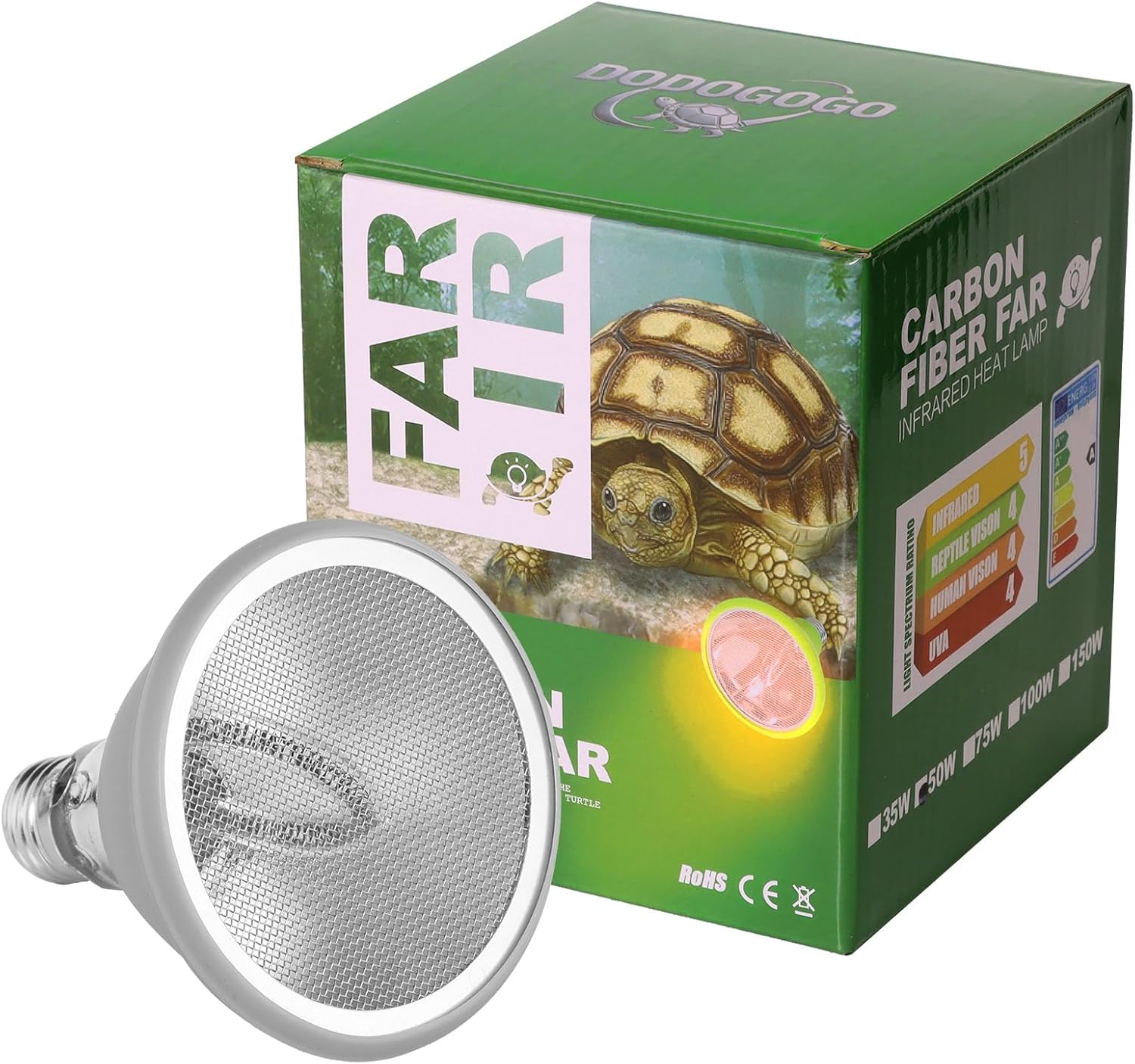 DODOGOGO 75W Deep Heat Projector |
9.4/10 | Buy |
| Best Premium |
 Ropoloogy HON1532 Deep Heat Projector, 2-Pack |
9.4/10 | Buy |
| Best Budget |
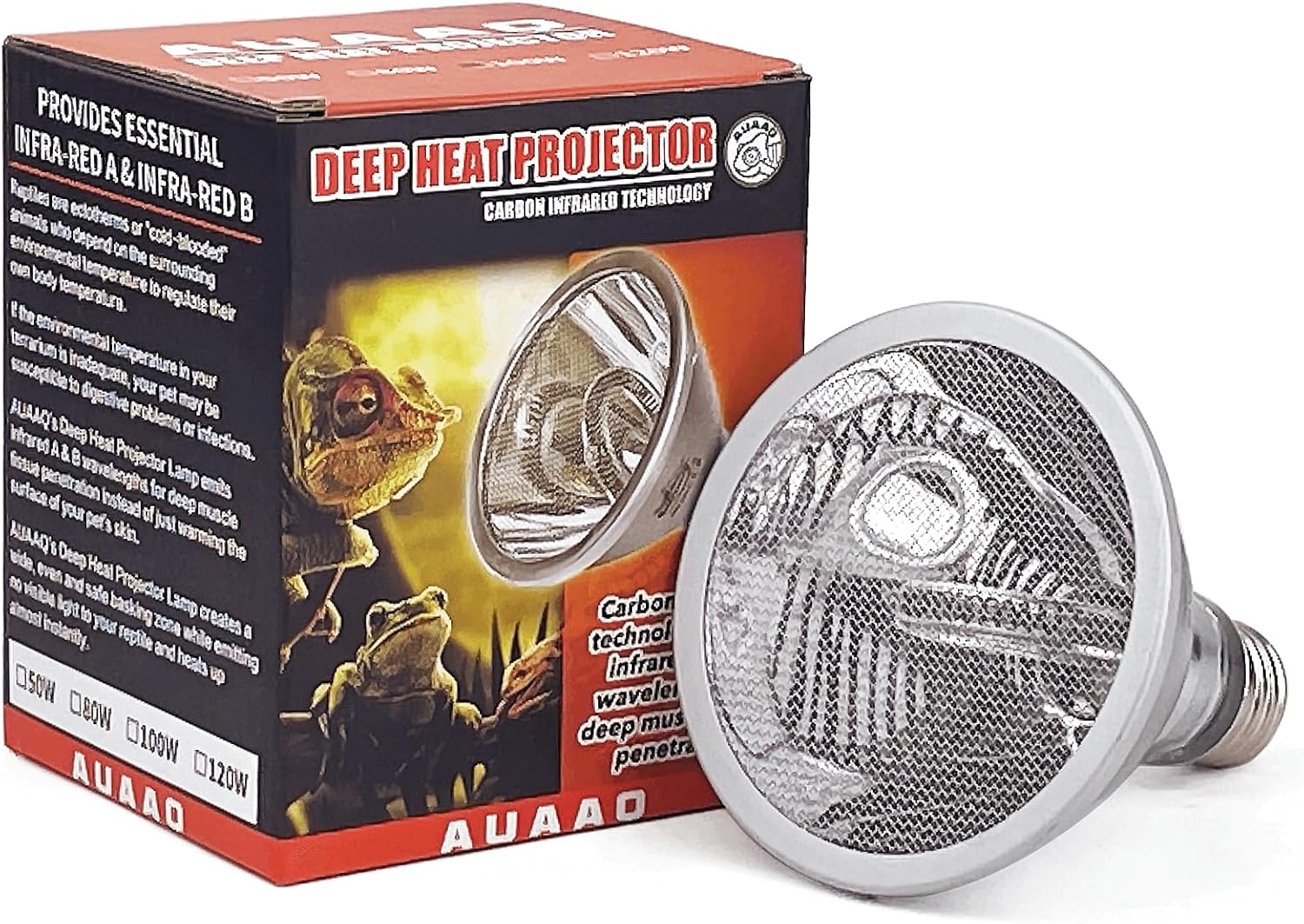 AUAAQ DHT80 Deep Heat Infrared Projector |
8.8/10 | Buy |
 Zoo Med ReptiCare Infrared Heat Projector |
Buy | ||
|
AUAAQ Deep Heat Projector 100W Reptile Lamp
|
8.6/10 | Buy | |
 REPTIZOO RL04DTC Dimming Thermostat Dome Fixture |
8.3/10 | Buy |
DODOGOGO 75W Deep Heat Projector
This deep heat projector provides infrared IR-A and IR-B wavelengths for a more natural, sun-like basking experience. Its low visible glow makes it suitable for 24-hour heating without disrupting day-night cycles, while the reflective design concentrates warmth. It's a solid option for reptile owners seeking efficient, focused heat with minimal light pollution.
Pros
- Emits deep-penetrating IR-A and IR-B wavelengths for natural basking heat.
- Produces minimal visible light, suitable for nighttime use without disturbing reptiles.
- Built-in reflector focuses heat into a strong, concentrated hotspot.
- Standard E26 base fits most common reptile lamp fixtures.
- Available in multiple wattages (50W, 75W, 100W) for different enclosure sizes.
Cons
- Requires pairing with a compatible dimming thermostat for precise temperature control, an additional purchase for many owners.
Ropoloogy HON1532 Deep Heat Projector, 2-Pack
This two-pack of deep heat projectors provides low-light, far-infrared warmth, ideal for creating a consistent basking zone for reptiles and amphibians. Its carbon fiber element heats quickly and evenly, and the minimal visible light output makes it suitable for both day and night use without disrupting sleep cycles.
Pros
- Emits far-infrared heat for deep, comfortable warmth.
- Low-light design avoids disrupting reptile circadian rhythms.
- Carbon fiber element provides stable, efficient heating.
- Comes in a convenient two-pack.
- Compatible with standard E26 ceramic lamp fixtures.
Cons
- Requires maintaining a safe distance (at least 40cm) to prevent burns.
- No manufacturer warranty is specified.
AUAAQ DHT80 Deep Heat Infrared Projector
This deep heat projector lamp provides focused, penetrating warmth for reptiles without disrupting their day-night cycle, as it emits no visible light. Its integrated reflector aims to concentrate heat efficiently, making it a solid option for owners of bearded dragons, snakes, and other reptiles requiring consistent, deep-tissue heating.
Pros
- Emits both Infrared A and B wavelengths for deep tissue heating.
- Produces no visible light, suitable for 24/7 use without disturbing circadian rhythms.
- Integrated parabolic reflector focuses heat efficiently, potentially saving energy.
- Heavy-duty construction suggests higher durability.
Cons
- Requires careful setup; using a deep dome lampshade is not recommended, which could limit fixture options.
- Risk of excessive heat buildup and shortened lifespan if ventilation is inadequate.
Zoo Med ReptiCare Infrared Heat Projector
This infrared heat lamp is designed for 24/7 operation to provide a consistent basking zone for reptiles. Its key feature is the emission of both Infrared A and B wavelengths, which is said to support deep tissue warmth and metabolism. It's a solid option for reptile owners seeking a long-lasting, thermostat-compatible heat source.
Pros
- Emits both Infrared A and B wavelengths for deeper heat penetration.
- Carbon fiber filament promotes long operational life (200,000 hours).
- Compatible with dimmers and thermostats for precise temperature control.
- Available in three wattages (60W, 100W, 150W) for different enclosure sizes.
- Provides a wide and even basking area.
Cons
- Limited to indoor, corded electric use.
- Specific suitability for different reptile species is not detailed in the provided specifications.
AUAAQ Deep Heat Projector 100W Reptile Lamp
This infrared heat lamp is designed to provide deep, penetrating warmth for reptiles without disrupting their day-night cycle. It emits no visible light, making it suitable for 24/7 use in enclosures for bearded dragons, turtles, and snakes.
Pros
- Emits both infrared A and B wavelengths for deep tissue heating.
- Produces virtually no visible light, preserving circadian rhythms.
- Built-in parabolic reflector focuses heat efficiently.
- Suitable for a wide range of reptiles including lizards and snakes.
Cons
- Manufacturer recommends against using deep dome lampshades, potentially limiting fixture options.
- Lacks a manufacturer warranty.
REPTIZOO RL04DTC Dimming Thermostat Dome Fixture
This integrated fixture combines a 5.5-inch deep dome lamp holder with a precise dimming thermostat, automating heat for reptile enclosures. It's designed for keepers seeking stable, automated temperature control without manual bulb adjustments.
Pros
- Integrated dimming thermostat maintains precise, stable temperature range
- ETL-certified fixture with efficient aluminum reflector enhances bulb output
- Digital display allows easy switching between Celsius and Fahrenheit
- Smart PID heating mode is designed to extend bulb lifespan
- Suitable for a variety of reptile setups, as noted in user reviews
Cons
- No physical on/off switch, requiring unplugging to power down completely
- Some users reported inconsistent performance or failure shortly after purchase
- Mounting hardware not included, may require user-supplied attachments
Best Deep Heat Projectors Buying Guide
Selecting the right deep heat projector involves more than just picking a wattage. You need to consider the specific needs of your pet, the size of their enclosure, and how the device integrates with your overall habitat management. This buying guide breaks down the key factors to evaluate, helping you match a product’s features to your reptile’s requirements for a safe and effective heating solution.
Wattage and Enclosure Size
The wattage of a deep heat projector directly correlates with the amount of heat it produces and the size of the area it can effectively warm. A common mistake is using a projector with too high a wattage for a small tank, which can lead to dangerous overheating and difficulty maintaining a proper temperature gradient. Conversely, an underpowered bulb in a large vivarium will fail to create an adequate basking spot. As a general rule, smaller enclosures (20-40 gallons) often do well with 50W to 75W projectors, while larger habitats (75+ gallons) may require 100W or 150W models. Always pair your projector with a reliable thermostat and thermometer to monitor and control the temperature precisely.
Consider the natural behaviors of your pet. Arboreal species that bask high up may benefit from a more focused heat beam, while terrestrial animals need a wider heat gradient across the floor. The material of your enclosure also plays a role; glass tanks lose heat faster than wooden or PVC cages, which might necessitate a slightly higher wattage. It’s often wiser to choose a projector compatible with a dimming thermostat, as this gives you fine-tuned control over the output, allowing one bulb to be perfectly adjusted for various conditions and seasons.
Infrared Wavelengths (IR-A & IR-B)
The primary benefit of a deep heat projector over other heat sources is its emission of specific infrared wavelengths. Look for products that explicitly state they emit both Infrared A (IR-A) and Infrared B (IR-B). IR-A is near-infrared radiation that penetrates deepest into tissue, providing a sun-like warmth that promotes natural basking behavior and aids in digestion. IR-B offers middle-infrared warmth that heats the surface of the skin and the immediate environment. Together, they create a more natural and therapeutic heat profile that warms your reptile from the inside out, similar to how they would absorb heat in their native habitat.
This deep-penetrating heat is particularly beneficial for reptiles that are recovering from illness, have arthritis, or are simply less active. It can help stimulate appetite and improve circulation. When researching, note that some basic heat lamps or ceramic emitters only produce IR-C, which is far-infrared and primarily heats the air and surfaces, not the animal itself. Ensuring your chosen projector delivers IR-A and IR-B is key to unlocking the full health benefits of this technology.
Light Emission and Day/Night Use
A major advantage of deep heat projectors is their low visible light output. This makes them suitable for providing supplemental heat both during the day and at night without disrupting your reptile’s circadian rhythm. Nocturnal species, like leopard geckos or ball pythons, especially benefit from this, as they can receive warmth during their active night hours without being exposed to bright light that stresses them and confuses their day/night cycle. When used during the day alongside a separate UVB light source, the projector provides pure heat without adding unnecessary visible light that could over-illuminate the enclosure.
When evaluating a product, check descriptions for terms like “low visible glow,” “minimal light,” or “night-time safe.” It’s crucial to distinguish these from black or red night-time bulbs, which emit colored light that can still be visible to many reptiles and may interfere with their vision and behavior. A true deep heat projector should produce virtually no visible light, only heat. This feature also makes them an excellent choice for creating a dawn/dusk effect by providing gentle warmth as other lights turn on or off.
Build Quality, Safety, and Fixture Compatibility
Safety is paramount when introducing any heat-producing element into your pet’s home. Look for projectors constructed with durable materials like carbon fiber filaments, which are known for longevity and even heat distribution compared to traditional metal coils. A protective metal mesh or guard around the bulb can prevent accidental contact if a reptile climbs or if the bulb is touched during maintenance. Proper ventilation is also critical; some projectors have built-in reflectors and advise against using them in deep, enclosed dome fixtures to prevent heat buildup that can drastically shorten the bulb’s lifespan or become a fire hazard.
Always verify the base type (standard E26 is most common) and ensure your lamp fixture is rated for the wattage of the bulb. Using a fixture not designed for high heat, like a plastic-clip lamp, is dangerous. For optimal control and safety, we highly recommend using a dimming thermostat specifically designed for heat lamps, like the one included in the REPTI ZOO fixture in our list. This prevents temperature spikes and extends the life of the bulb. Remember to always let the bulb cool completely before handling it for replacement or adjustment.
| Feature | Why It Matters for Your Pet | What to Look For |
|---|---|---|
| Wattage | Determines heat output for your tank size; prevents under/overheating. | Match wattage to enclosure volume (e.g., 75W for 40 gal). Use with a thermostat. |
| IR-A & IR-B | Provides deep, penetrating warmth for muscle and tissue health. | Product description must specify both wavelengths. |
| Low Light | Allows 24/7 heat without disrupting sleep cycles or stressing nocturnal pets. | Terms like “minimal visible glow” or “night-time safe.” |
| Build & Ventilation | Ensures safety, durability, and prevents dangerous heat pockets. | Carbon fiber element, metal guard, warnings against deep domes. |
Species-Specific Considerations
Different reptiles have different thermoregulation needs. Desert species like bearded dragons require a high-intensity basking spot to raise their core body temperature effectively for digestion. A projector with a focused beam and higher wattage (like 100W or 150W) is often necessary to achieve this. In contrast, tropical species like crested geckos need a gentler, more ambient heat to maintain a stable overall enclosure temperature without creating an overly hot zone, making a lower-wattage projector (50W-75W) more appropriate.
Consider your pet’s behavior. Strong climbers or curious snakes may come into contact with the fixture, so a secure, well-mounted lamp with a guard is essential. For animals that are prone to dehydration, like chameleons, ensure the projector is placed in a way that doesn’t overly dry out the habitat; combining it with proper humidity control is key. Understanding your specific pet’s natural history and behavior is the final step in choosing a heater that supports their health rather than just meeting a generic temperature number.
Why You Should Trust Us
Our recommendations are the result of a thorough, objective, and data-driven research process designed to cut through marketing claims and provide you with reliable information. We do not simply list products; we analyze and compare them against a consistent set of criteria relevant to pet owners. Our goal is to be a transparent resource you can rely on when making important decisions for your pet’s care.
Our methodology involves several key steps. First, we compile detailed specifications from manufacturer listings, focusing on wattage, infrared wavelength types, build materials, and safety features. We then cross-reference this technical data with sizing guidelines to ensure recommendations are appropriate for different enclosure types and pet sizes. Next, we research safety information, including any recalls or consistent owner-reported issues. Finally, we analyze and synthesize feedback from a wide range of real pet owners across multiple retailer platforms and community forums. This allows us to identify common praises and concerns regarding real-world performance, durability, and pet reaction. Each product is then scored against our published buying criteria to generate our ranked selections.
Final Thoughts
After reviewing 6 top models, a few stand out for specific needs. For reptile owners seeking a reliable, well-reviewed option that effectively delivers deep-penetrating IR-A and IR-B heat, the 80W Deep Heat Infrared Projector Lamp from AUAAQ is an excellent overall choice. Its professional-grade construction, focused reflector, and strong owner feedback make it a dependable workhorse for many common species.
If value and versatility are your top priorities, the 2 Pack 100w Deep Heat Projector Infrared Lamp offers a cost-effective solution for heating multiple enclosures or having a backup on hand. For those who want complete control over their habitat’s climate, pairing any of these projectors with the REPTI ZOO Reptile Light Fixture with Dimming Thermostat is a smart investment. This combination allows you to precisely dial in the perfect basking temperature, enhancing safety and bulb longevity. Remember, the best deep heat projectors for you is the one that safely and consistently meets the unique thermal needs of your reptile within their specific environment.
FAQs
What is the best deep heat projectors in 2026?
The “best” deep heat projector depends on your specific setup and pet. Based on our November 2026 research, key factors include matching the wattage to your enclosure size, ensuring the bulb emits both IR-A and IR-B wavelengths, and using it with a compatible, well-ventilated fixture. Our top list highlights models like the AUAAQ 80W lamp for general use and the REPTI ZOO fixture for those wanting integrated thermostat control.
Can I use a deep heat projector at night for my leopard gecko?
Yes, that is one of their primary benefits. Deep heat projectors produce minimal to no visible light, making them ideal for providing nighttime warmth to nocturnal reptiles like leopard geckos without disrupting their natural sleep-wake cycle. This allows them to stay active and digest meals during their normal night-time hours while remaining comfortably warm.
Do deep heat projectors need a special fixture?
They require a fixture rated for the heat they produce. A standard porcelain or ceramic E26 socket fixture is necessary, as plastic parts can melt. Crucially, many projectors have built-in reflectors and should NOT be used in deep, enclosed dome lampshades, as this traps heat and can cause the bulb to fail prematurely. Always check the manufacturer’s instructions for specific fixture recommendations.
What’s the difference between a deep heat projector and a ceramic heat emitter?
Both provide heat without light, but they work differently. A ceramic heat emitter (CHE) primarily emits far-infrared (IR-C) that heats the air and surfaces. A deep heat projector emits near and mid-infrared (IR-A & IR-B), which penetrates deeper into your reptile’s tissue, providing a more natural, sun-like warmth. For more on this alternative, see our guide on the best ceramic heat emitters.
How do I know what wattage to choose for my bearded dragon’s tank?
Wattage depends on tank size and the ambient room temperature. For a standard 40-gallon breeder tank, a 75W or 100W projector is often a good starting point. The most reliable method is to use the projector with a dimming thermostat and a digital thermometer. Place the thermometer at the basking spot, and use the thermostat to adjust the projector’s output until you achieve the ideal basking temperature (typically 95-110°F for an adult bearded dragon).
About the author

The Pets Viora Editorial Team researches, writes, fact-checks, and updates every buying guide on Pets Viora. We cover products for dogs, cats, fish, birds, reptiles, small pets, horses, and backyard poultry, and every guide starts with the animal and the problem it needs to solve, not with a best-seller list. Our recommendations are based on product specifications and sizing, safety information and recalls, and recurring patterns in feedback from real owners across multiple sources, scored against the criteria published on our How We Rank page. Brands can't pay for placement, and our guides are general information, not veterinary advice. Questions, corrections, or product suggestions: [email protected]