11 Best Coco Husk of 2026 – Expert Picks
Coco husk provides excellent moisture retention and aeration for reptile habitats and plant cultivation. Our 2026 roundup evaluates top options to help you select the right substrate for your needs.
 By Pets Viora Editorial Team
Updated October 3, 2026
Choosing the right substrate for your pet’s habitat or your garden is a critical decision that impacts health, comfort, and maintenance. In November 2026, we conducted an in-depth analysis of the best coco husk products on the market, evaluating them for their safety, performance, and suitability for different needs. Whether you’re creating a tropical paradise for your reptile, improving moisture retention for your plants, or looking for a sustainable soil alternative, our comprehensive guide is designed to help you make an informed choice. We compared 11 top-rated products from leading brands to bring you this curated list. For more information on creating the perfect environment, explore our guide on the best reptile substrates.
Our Top 11 Best Coco Husk Picks for 2026
Below is our dynamically updated comparison table of the top 11 best coco husk products we analyzed. This interactive tool allows you to filter and sort based on key features like brand, price, and rating to help you find the perfect match for your specific requirements.
| Award | Product | Viora Score About Viora ScoreThe Viora Score is our own 0–10 rating based on performance, safety, durability, pet comfort, and value. It reflects independent research and is never influenced by brands or affiliate commissions. Learn more › | |
|---|---|---|---|
| Best Overall |
 Zilla Coconut Husk Reptile Bedding Brick |
8.9/10 | Buy |
| Best Value |
 ZeeDix 2-Pack Coconut Fiber Reptile Substrate |
8.8/10 | Buy |
 Riare 10-Pound Coconut Husk Substrate |
8.8/10 | Buy | |
 Exo Terra PT2775 8-Quart Coconut Husk Substrate |
8.6/10 | Buy | |
 Legigo LG-Coco Bricks 10-Pack Coco Coir Soil |
8.4/10 | Buy | |
| Best Premium |
 Plantonix Coco Chips 10lb Mulch Brick |
8.9/10 | Buy |
 Riare R-coco Organic Coco Coir Chips, 2-Pack |
Buy | ||
| Best Budget |
 Legigo L-Coco Chips 1.1 lb Coco Coir Brick |
8.8/10 | Buy |
 Riare 10LB Organic Coconut Husk Chip Substrate |
8.8/10 | Buy | |
 Halatool 10-Pound Compressed Coconut Husk Chip |
8.8/10 | Buy | |
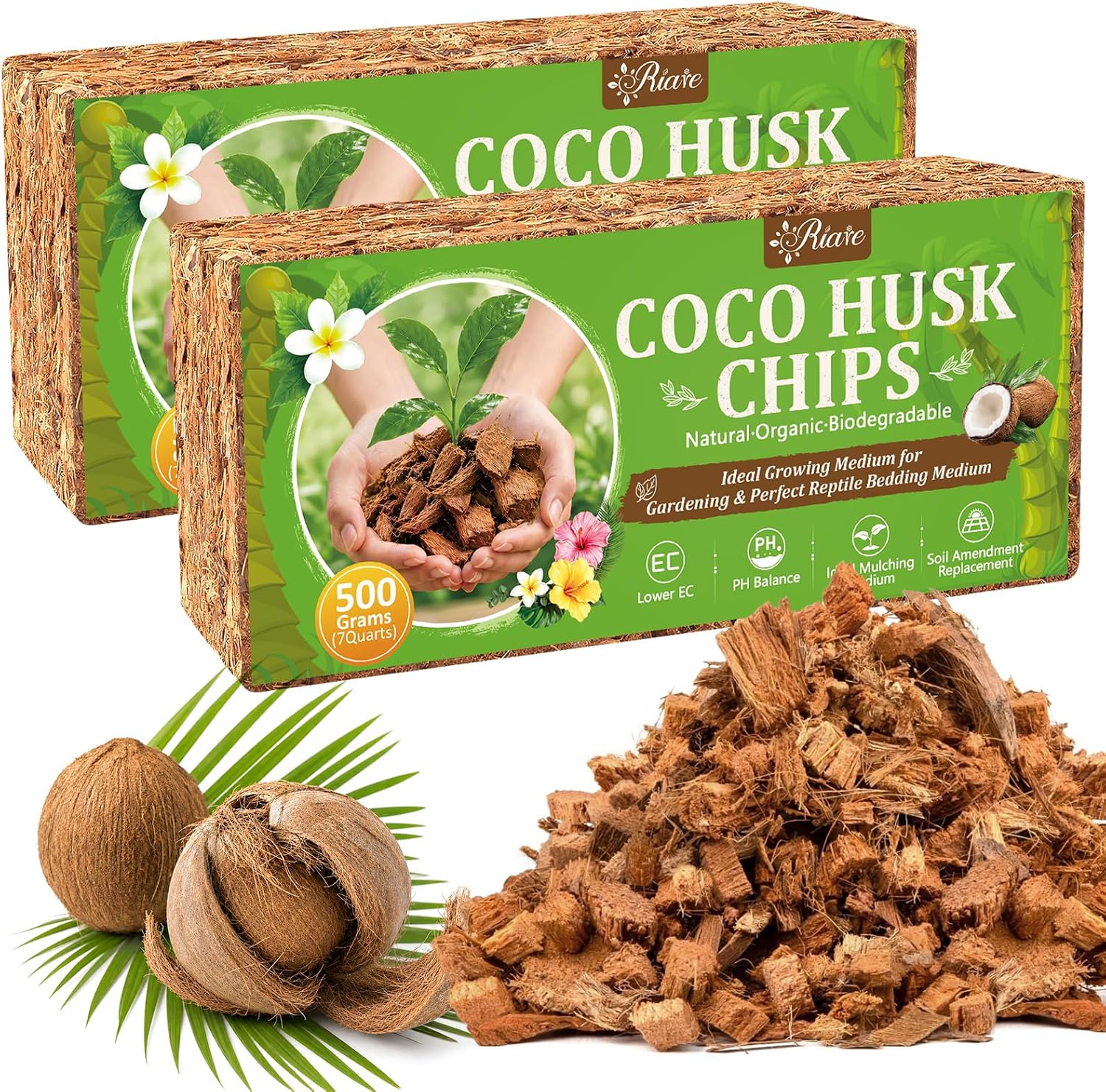 Riare Organic Coco Husk Chips 2-Pack |
8.8/10 | Buy |
Zilla Coconut Husk Reptile Bedding Brick
This compressed coconut fiber brick provides natural humidity control for tropical reptile habitats. It expands with water and its soft texture encourages natural burrowing behavior.
Pros
- Effective for maintaining humidity in tropical terrariums
- Encourages natural burrowing instincts
- Made from 100% organic coconut fiber, a sustainable material
- One brick can cover the bottom of a 55-gallon enclosure when expanded
Cons
- Requires preparation (adding hot water) before use
ZeeDix 2-Pack Coconut Fiber Reptile Substrate
This compressed coconut coir brick is a versatile, natural bedding that expands with water to create a soft, burrowable substrate. It's well-regarded for its odor control and suitability for creating naturalistic enclosures for reptiles, amphibians, and invertebrates.
Pros
- Made from 100% natural, biodegradable coconut fiber, safe for pets and gardens.
- Effectively absorbs liquids and waste while reducing odors to maintain a cleaner habitat.
- Compact and lightweight for easy storage, expanding significantly when hydrated.
- Versatile for use with many pet types, including snakes, frogs, lizards, and tarantulas, and for gardening.
Cons
- May require pre-washing to reduce salt content, especially when used with sensitive species like worms.
- Some reptile owners note it carries a risk of impaction for certain species, such as bearded dragons or leopard geckos, and recommend alternatives for them.
Riare 10-Pound Coconut Husk Substrate
This compressed coconut husk brick expands to 72 quarts of loose, textured bedding. It's highly regarded for its ability to retain humidity and stimulate natural burrowing behaviors, making it a popular choice for snake and reptile owners.
Pros
- Expands significantly from a compact, easy-to-store brick
- Effectively maintains humidity levels for reptile enclosures
- Soft, odorless, and encourages natural digging behavior
- Biodegradable and easy to clean with good waste absorption
Cons
- Requires preparation time for soaking and expansion
Exo Terra PT2775 8-Quart Coconut Husk Substrate
This compressed coconut husk brick expands to create a natural, humidity-retaining substrate for tropical reptile and amphibian enclosures. It's praised for its excellent moisture retention and mold resistance, making it a versatile choice for various habitats.
Pros
- Highly effective at increasing and maintaining humidity in terrariums.
- Expands significantly from its compressed brick form, offering good value.
- 100% natural and considered safe for burrowing and digging animals.
- Resists mold growth even in consistently humid environments, based on user feedback.
Cons
- The fibrous, mulch-like texture may not be suitable for all enclosure types or animal preferences.
- Requires significant time and effort to soak and break apart the dense brick before use.
Legigo LG-Coco Bricks 10-Pack Coco Coir Soil
This compressed, organic coconut fiber soil amendment is a sustainable alternative to traditional potting mix. It expands with water to create a lightweight, aerated medium that promotes healthy root growth and is suitable for a wide range of plants and reptile bedding.
Pros
- Made from 100% organic, biodegradable coconut husk fiber
- Compact, lightweight bricks are easy to store and expand with water
- Provides excellent aeration and drainage for healthy roots
- Can be reused indefinitely and is suitable for various gardening and pet applications
- PH balanced with low EC, making it a gentle growing medium
Cons
- Requires hydration before use, which can be messy and requires getting the water-to-brick ratio right
- The spongy texture may not be ideal for all plant types that prefer heavier, denser soils
Plantonix Coco Chips 10lb Mulch Brick
This compressed brick of coconut husk chips expands with water to create a moisture-retaining, airy mulch for outdoor gardens and container plants. It's a sustainable, organic alternative to wood mulch, ideal for tropical plants, orchids, and raised beds to reduce watering frequency.
Pros
- 100% organic and made from recycled coconut husks.
- Excellent moisture retention helps reduce water evaporation and frequency of watering.
- Light, airy texture provides good airflow and resists heavy compaction.
- Compressed brick format is easy to store and transport.
- Suitable for a wide range of plants from houseplants to large outdoor gardens.
Cons
- Primarily marketed for plant use, its direct benefits for pet habitats (like reptile enclosures) are not detailed in this listing.
Riare R-coco Organic Coco Coir Chips, 2-Pack
This compressed coconut husk brick set offers an organic, sustainable soil amendment. Each brick expands significantly with water, making it a space-efficient option for gardeners looking to improve soil aeration and moisture retention.
Pros
- 100% natural and organic composition
- Compressed bricks are easy to store and transport
- Expands to 7 quarts per brick
- Promotes good aeration and drainage
- Low EC and pH-balanced substrate
Legigo L-Coco Chips 1.1 lb Coco Coir Brick
This compressed coconut husk brick expands into a versatile, soil-free substrate. Its excellent moisture retention and aeration make it a strong choice for orchids and reptile enclosures, offering a clean and biodegradable medium.
Pros
- Made from 100% organic, desalted coconut coir for a clean growing medium.
- Absorbs 4-6 times its weight in water, providing consistent moisture.
- Porous structure ensures good drainage and aeration to prevent root rot.
- Stable pH range (5.5-6.5) and low EC value are suitable for most plants.
- Compressed brick is easy to store and expands to 5-7 times its size when hydrated.
Cons
- Primarily a soil amendment or substrate, not a complete nutrient source on its own.
- May require mixing with other media for optimal results in all applications.
Riare 10LB Organic Coconut Husk Chip Substrate
An organic, compressed coconut coir chip brick that expands significantly with water. Its low EC and pH-balanced, breathable formula promotes healthy root growth and moisture retention for a wide range of plants.
Pros
- Made from 100% organic and sustainable coconut husk.
- Compressed brick is easy to store and expands to a high volume (72 quarts).
- Promotes aeration and drainage while retaining moisture for plant roots.
- pH-balanced and low EC formula suitable for various plant types.
- Can be used alone or mixed with other soil amendments.
Halatool 10-Pound Compressed Coconut Husk Chip
This organic coconut husk chip brick expands significantly to create a versatile substrate. It's praised for its excellent moisture retention and air permeability, making it a solid choice for plant enthusiasts and reptile owners seeking a natural bedding or soil amendment.
Pros
- 100% natural and organic material, safe for plants and pets
- Excellent water drainage and moisture retention properties
- Highly versatile for gardening, landscaping, and reptile substrate
- Compressed brick format expands up to 72 quarts for efficient storage
Cons
- Requires preparation time for soaking and expansion before use
Riare Organic Coco Husk Chips 2-Pack
These compressed coconut husk bricks provide an organic, sustainable alternative to traditional potting soil and bark. They offer a balanced, low-salt substrate with excellent moisture retention and drainage, making them a versatile base or amendment for a wide range of plants, including orchids and houseplants.
Pros
- Made from 100% natural, organic, and degradable coconut coir.
- Pre-treated to maintain a balanced, low-salt pH ideal for root health.
- High expansion ratio and water retention reduces watering frequency.
- Chunky texture promotes good drainage and soil aeration.
- Versatile for potting, soil conditioning, and as terrarium bedding for reptiles.
Cons
- Requires soaking and potential rinsing before use, adding a preparation step.
Best Coco Husk Buying Guide
Selecting the ideal best coco husk involves more than just picking the first bag you see. Different formulations serve different purposes, from reptile bedding to garden mulch. This buying guide outlines the essential criteria you should consider to ensure you get a product that is safe, effective, and perfectly suited to your needs.
1. Intended Use: Reptile Habitat vs. Horticulture
The primary distinction in best coco husk products is their intended application. Products like the Zilla Coconut Husk, Organic Reptile Bedding and Riare 10LB Coconut Husk Chip for Reptiles are specifically designed for animal enclosures. They prioritize features like soft texture for burrowing, high absorbency for waste and odor control, and the ability to maintain stable humidity levels, which is crucial for species like chameleons and frogs.
Conversely, horticultural products such as the Coco Chips Mulch Brick (10lbs) or Riare 10LB Organic Coco Coir Chips for Plants focus on plant health. Their key attributes include excellent drainage and aeration to prevent root rot, long-lasting moisture retention to reduce watering frequency, and a slow decomposition rate that enriches the soil. Using a product designed for plants in a reptile tank, or vice versa, may not yield the desired results and could potentially be unsafe for your pet.
2. Texture and Particle Size
The texture of the best coco husk significantly affects its performance. For reptile substrates, you generally have two main types: fine fiber and chunky chips. Fine coconut fiber, found in products like the ZeeDix 2 Pack Coconut Fiber Substrate, is soft and excellent for species that enjoy digging or burrowing, such as some snakes and amphibians. It holds humidity very well and provides a natural-looking floor.
Coconut husk chips, like those in the Halatool 10LBS Coco Husk Chips for Plants, offer a chunkier, more textured surface. For reptiles, this can help stimulate natural behaviors and is easier for some pets to walk on. For plants, the chunky structure is paramount as it creates vital air pockets in the soil, promoting healthy root growth and preventing compaction. Consider your pet’s species or your plant’s root system when choosing between fine and chunky textures.
3. Moisture Retention and Drainage
This is a critical balancing act. A high-quality best coco husk should absorb and hold a significant amount of moisture—often 4 to 6 times its weight—while also allowing excess water to drain away. For tropical reptile habitats, superior moisture retention is needed to maintain the high humidity levels these animals require. Products like the Exo Terra Coco Husk Brick, 8 QT (8.8 L) are formulated for this purpose.
For gardening, the goal is to keep plant roots consistently moist but never waterlogged. The porous nature of coconut husk allows it to hold water like a sponge and release it slowly to the roots, while its structure ensures good drainage. This property makes it an excellent component in bioactive substrates and potting mixes, supporting both moisture and microbial life.
4. pH Balance and Salt Content
Natural coconut husk can contain salts from its processing. Reputable manufacturers will rinse and buffer their products to achieve a neutral to slightly acidic pH (typically between 5.5 and 6.8) and a low Electrical Conductivity (EC), which indicates low salt levels. This is non-negotiable for both plant and animal safety.
A product with high salt content or an improper pH can harm sensitive plant roots or irritate a reptile’s skin, eyes, and respiratory system. Many products we reviewed, including the Legigo 1.1 LB Coco Coir Chips for Plants and the Riare 2 Pack Organic Coco Coir Chips for Plants, explicitly state they are low-EC and pH balanced. Even with pre-washed products, it’s a good practice to rinse the expanded substrate with fresh water before use, especially for sensitive species.
5. Expansion Ratio and Ease of Use
Most best coco husk products are sold in compressed bricks or blocks to save on shipping and storage space. The expansion ratio—how much volume you get from a dry brick—is an important value metric. For example, a standard 10lb brick can expand to 72 quarts or more. Smaller bricks, like the Riare Organic Coco Coir Chips for Plants Coconut, expand to about 7 quarts each.
Consider the size of your enclosure or garden bed to avoid waste or shortage. The process is generally simple: soak the brick in warm water, break it apart, and drain excess water. However, planning for a large container and some mixing time is necessary. Products that are easy to break apart and fluff up will save you time and effort during setup.
6. Sustainability and Cleanliness
Best Coco Husk is celebrated as a renewable, biodegradable byproduct of the coconut industry. It’s an eco-friendly alternative to peat moss (whose harvest damages ecosystems) and non-biodegradable bedding materials. When you’re done with it, spent coconut husk can be composted or added directly to outdoor garden beds as a soil amendment.
For pet owners, cleanliness is paramount. A good substrate should be dust-free to protect your pet’s respiratory health and have excellent odor-control properties. It should absorb waste effectively, making spot-cleaning easier and helping to maintain a healthier overall environment in the enclosure, which is a cornerstone of good reptile humidity and habitat management.
| Feature | Reptile-Focused Substrate | Plant-Focused Mulch/Soil |
|---|---|---|
| Primary Goal | Animal comfort, humidity control, waste absorption | Soil aeration, moisture retention, root health |
| Key Texture | Fine fiber or soft chips for burrowing | Chunky chips for drainage and structure |
| Moisture Role | Maintains ambient humidity in enclosure | Retains water at root zone, prevents evaporation |
| Clean-Up | Spot-cleaning of waste, full changes periodically | Breaks down slowly, can be tilled into soil |
Why You Should Trust Us
Our recommendations are the result of a meticulous, objective research process designed to cut through marketing claims and highlight genuine value. We do not accept paid placements or allow brand relationships to influence our rankings. Our methodology involves a multi-point analysis: we start by comparing the published specifications, sizing, and material composition of each product. We then verify safety information and check for any relevant recalls or widespread owner complaints.
Most importantly, we analyze feedback from a wide array of real pet owners and gardeners. We scour reviews, forum discussions, and community feedback to understand the long-term performance, common issues, and real-world satisfaction associated with each product. Finally, we score all contenders against our published set of criteria—such as safety, suitability for purpose, and user-friendliness—to arrive at our expert picks. Our goal is to provide you with transparent, data-driven insights you can rely on.
Frequently Asked Questions
What is the best coco husk for 2026?
The “best” best coco husk depends entirely on your specific use case. For creating a tropical reptile habitat, a product like Zilla Coconut Husk is often top-rated for its humidity control. For gardening and improving soil structure, a chipped product like Riare Organic Coco Coir Chips is highly effective. Our comparison table above allows you to filter based on your primary need to find the best match for 2026.
Is best coco husk safe for all reptiles?
Best Coco Husk is generally safe for many reptiles, especially tropical and subtropical species that thrive in humid environments, such as chameleons, frogs, and some geckos. However, it is not suitable for arid-desert species like bearded dragons or leopard geckos, as the constant moisture can lead to respiratory infections and scale issues. Always research your specific pet’s natural habitat requirements before choosing a substrate.
How often should I change coconut husk substrate in my pet’s enclosure?
The frequency depends on the size of your pet and the enclosure. For waste, spot-cleaning should be done daily. A complete substrate change is typically recommended every 1 to 2 months for most setups to prevent the buildup of bacteria and ammonia. In bioactive enclosures with a clean-up crew, the substrate can last much longer. Always monitor for odors or mold as a sign it’s time for a change.
Can I use best coco husk for my potted plants and my reptile tank?
While the base material is the same, we do not recommend using the same product interchangeably unless it is explicitly marketed as safe for both. Horticultural best coco husk may not be rinsed as thoroughly for salt content, which could harm your reptile. Reptile bedding is often a finer texture that may not provide the optimal drainage plants need. It’s safest and most effective to purchase products formulated for your specific intended use.
Do I need to add anything to best coco husk when using it for plants?
Pure best coco husk is low in nutrients. While it’s an excellent medium for moisture and aeration, you will typically need to mix it with other components to create a balanced potting mix. A common recipe is to combine it with perlite for drainage and a nutrient source like worm castings or a slow-release fertilizer. For more on creating ideal plant environments, which parallels creating good pet habitats, you can read about essential lighting considerations.
About the author

The Pets Viora Editorial Team researches, writes, fact-checks, and updates every buying guide on Pets Viora. We cover products for dogs, cats, fish, birds, reptiles, small pets, horses, and backyard poultry, and every guide starts with the animal and the problem it needs to solve, not with a best-seller list. Our recommendations are based on product specifications and sizing, safety information and recalls, and recurring patterns in feedback from real owners across multiple sources, scored against the criteria published on our How We Rank page. Brands can't pay for placement, and our guides are general information, not veterinary advice. Questions, corrections, or product suggestions: [email protected]