Top 9 Best Low Starch Horse Feed for November 2026
Horses requiring careful management of metabolic conditions or weight need a specialized diet. These low starch feeds offer a safer nutritional profile while still meeting essential energy requirements.
 By Pets Viora Editorial Team
Updated October 3, 2026
Finding the Right Low Starch Nutrition for Your Horse
Choosing the best low starch horse feed is a critical decision for horse owners managing conditions like Equine Metabolic Syndrome (EMS), Cushing’s disease (PPID), laminitis, or simply aiming for weight control. A low-starch diet helps regulate blood sugar and insulin levels, reducing the risk of flare-ups and supporting overall equine wellness. In November 2026, the market offers more specialized options than ever, making it essential to understand the nuances between products.
To simplify your search, we’ve researched and compared 9 leading best low starch horse feed formulas. This guide is designed to help you navigate key nutritional factors, from Non-Structural Carbohydrate (NSC) levels to fiber sources and fortification. Whether you’re caring for an easy keeper, a senior horse, or an insulin-resistant equine, selecting the right feed is a cornerstone of proactive management. For a broader look at equine nutrition, explore our guide on the best horse feed.
| Award | Product | Viora Score About Viora ScoreThe Viora Score is our own 0–10 rating based on performance, safety, durability, pet comfort, and value. It reflects independent research and is never influenced by brands or affiliate commissions. Learn more › | |
|---|---|---|---|
 Nutrena SafeChoice Original Horse Feed |
Buy | ||
 Triple Crown Low Starch Horse Feed |
Buy | ||
| Best Value |
 Bluebonnet Triple Crown Senior Horse Feed, 50 lb |
9.1/10 | Buy |
 Hygain Zero Ultra-Low Starch Horse Feed |
8.4/10 | Buy | |
 New Country Organics Low Starch Horse Feed 40 lb |
9.4/10 | Buy | |
| Best Premium |
 Triple Crown Lite Low Starch & Sugar Horse Feed |
9.4/10 | Buy |
| Best Overall |
 Triple Crown Safe Starch Fortified Forage 40-lb |
9.4/10 | Buy |
| Best Budget |
 Kent Blue Seal Sentinel Safe Start Horse Feed |
Buy | |
 Kent Blue Seal Sentinel Performance LS Horse Feed |
Buy |
Nutrena SafeChoice Original Horse Feed
A controlled-starch, pelleted feed designed for balanced nutrition across all life stages. It focuses on digestive support with added prebiotics and probiotics, making it a versatile choice for horses prone to metabolic or digestive sensitivities.
Pros
- Formulated with controlled starch and sugar levels for metabolic support.
- Includes prebiotics, probiotics, and amino acids for digestive and muscle health.
- Scientifically balanced for all life stages and convenient for mixed herds.
- Features Topline Balance and organic trace minerals for overall wellness.
Cons
- Available only in an unflavored pellet form.
Triple Crown Low Starch Horse Feed
This low-starch, low-sugar pellet feed is designed for horses requiring careful dietary management. Its formulation omits whole grains, alfalfa, and molasses to help manage energy and allergy risks while providing calories from quality fiber and fat sources like flaxseed and rice bran.
Pros
- Formulated with low starch and sugar levels to help manage hyperactivity and minimize allergy risks.
- Free from common irritants like whole grains, alfalfa, and molasses.
- Features high-quality fiber sources and added fats for essential calories.
- Suitable for a wide range of horses, including mature, metabolic, and performance animals.
- Limited ingredient diet with added probiotics for digestive support.
Bluebonnet Triple Crown Senior Horse Feed, 50 lb
This senior feed uses a beet pulp-based formula to deliver high fat and fiber, making it a solid choice for weight management and digestive support in older horses. Its mash-ready consistency also suits horses with dental issues.
Pros
- High-fat, high-fiber profile aids in weight gain and maintenance for senior horses
- Beet pulp, flaxseed, and rice bran formulation supports digestive health
- Can be mixed with water for easy consumption by horses with poor teeth
- Suitable as a sole ration for horses unable to eat hay or pasture
Cons
- Premium price point, as noted in buyer feedback
Hygain Zero Ultra-Low Starch Horse Feed
A fully fortified, cereal grain-free feed formulated for horses with metabolic or weight management issues. It's distinguished by its exceptionally low NSC, starch, and sugar content, aiming to support conditions like insulin resistance and laminitis.
Pros
- Ultra-low starch, sugar, and NSC levels, which are critical for managing metabolic disorders.
- High in soluble fiber (35%) to support digestive health.
- Cereal grain-free and fortified with essential vitamins, minerals, biotin, and natural Vitamin E.
- Suitable for all life stages, offering broad dietary application.
Cons
- Primarily targeted for small horse breeds, which may limit suitability for larger animals.
- The bag format, while standard, may be less convenient for very small-scale use compared to smaller packages.
New Country Organics Low Starch Horse Feed 40 lb
This organic, low-starch formula is designed specifically for adult horses with metabolic issues or those needing a carb-controlled diet. It provides a 16% protein blend from corn-free and soy-free ingredients to support digestive and hind gut health.
Pros
- Formulated for horses with metabolic disorders or low carbohydrate needs
- Certified organic and non-GMO, free from corn and soy
- High protein (16%) content supports muscle maintenance
- Promotes hind gut health and balanced digestion
Cons
- Packaged in a 40-pound bag, which may be cumbersome for some owners to handle
- Specifically recommended for small horse breeds, limiting suitability for larger breeds
Triple Crown Lite Low Starch & Sugar Horse Feed
A pelleted feed formulated specifically for easy keepers and horses with metabolic sensitivities. It's designed to provide essential nutrition while managing weight, free of whole grains and molasses, and fortified with probiotics.
Pros
- Low starch and sugar profile suitable for weight management and metabolic support.
- Whole grain and molasses-free formula for sensitive horses.
- Fortified with probiotics and direct-fed microbials for digestive health.
- Suitable for all life stages and breed sizes, including ponies and minis.
- Highly rated by verified buyers for its intended purpose.
Cons
- Available in one large 50-pound bag, which may be cumbersome for some owners to store.
Triple Crown Safe Starch Fortified Forage 40-lb
A grain-free, low-starch feed designed as a complete forage replacement. It's formulated to support horses with metabolic issues, dental concerns, or those needing to gain weight, providing balanced nutrition from timothy hay and soybean meal.
Pros
- Low-starch and sugar formula ideal for metabolic and sensitive horses
- Serves as a complete hay replacement for shortages or poor dental health
- Fortified with vitamins and minerals for balanced nutrition
- Grain-free and molasses-free composition
- Suitable for all life stages and breed sizes
Cons
- Plant-based diet with soybean meal may not suit all dietary preferences
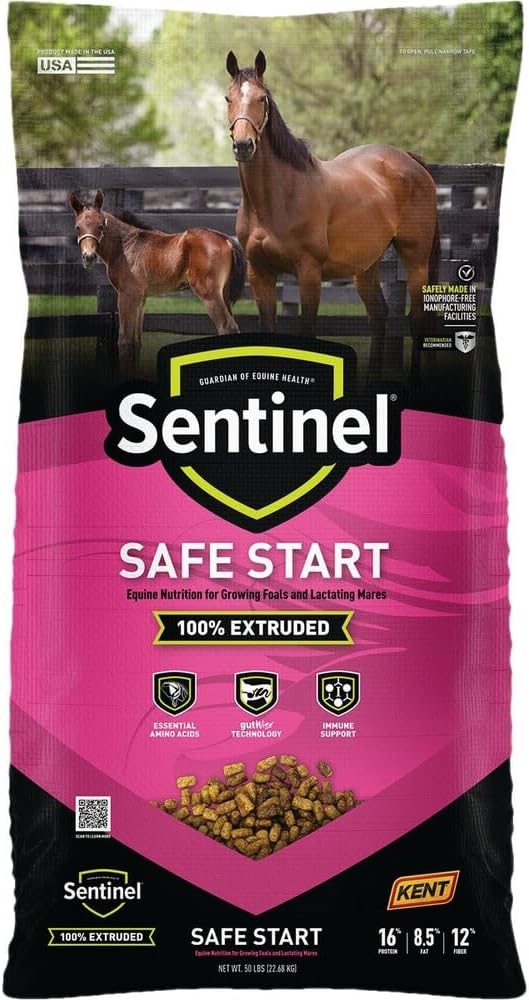
Kent Blue Seal Sentinel Safe Start Horse Feed
A complete pelleted feed designed for adult horses, formulated with a breathable mix to support digestive health. It's a straightforward, no-frills option for owners seeking a simple daily ration.
Pros
- Formulated for adult horses.
- Pelleted form for easy feeding and portion control.
- Breathable design to help maintain freshness.
Kent Blue Seal Sentinel Performance LS Horse Feed
This high-fat, low-sugar and low-starch formula is designed for adult horses needing a specialized performance diet. The breathable packaging helps maintain freshness.
Pros
- Formulated with low sugar and starch content, beneficial for some dietary needs.
- High-fat profile can support energy requirements.
- Breathable packaging design.
- Large 50-pound bag size.
Cons
- Specifically for adult horses, not suitable for foals or seniors without vet guidance.
- The large bag may be cumbersome for some owners to handle and store.
Best Low Starch Horse Feed Buying Guide for 2026
Understanding Starch, Sugar, and NSC Levels
The primary goal of a low starch horse feed is to minimize Non-Structural Carbohydrates (NSC), which is the sum of starch plus water-soluble sugars (like fructans). These are rapidly digested in the small intestine, causing spikes in blood glucose and insulin. For metabolic horses, managing NSC intake is non-negotiable. Look for products that specify a guaranteed maximum NSC percentage on their tag. While ideal levels depend on the individual horse and veterinary guidance, many feeds designed for metabolic support target an NSC below 10-12%.
It’s crucial to differentiate between “low starch” and “low sugar” claims, as both contribute to the total NSC. Some products, like Hygain Zero – Ultra-Low Starch, Low Sugar, explicitly advertise an NSC of less than 6.5%, making it a strong candidate for horses with severe sensitivities. Always request a hay analysis as well, as the forage portion of the diet contributes significantly to total NSC intake. The combined diet (hay plus concentrate) should meet your horse’s specific threshold.
Evaluating Fiber Sources and Digestibility
With reduced starch, high-quality fiber becomes the main source of energy in a best low starch horse feed. Look for feeds that utilize digestible fiber sources like beet pulp, soy hulls, and alfalfa. These provide slow-release calories (fermented in the hindgut) without the glycemic impact of grains. For example, Triple Crown Senior Horse Feed uses a beet pulp-based formula, which is excellent for supporting digestive health and maintaining weight in seniors or hard keepers.
The type of fiber also affects palatability and suitability for horses with dental issues. Feeds that can be soaked into a mash, such as many senior formulas, are invaluable for older equines or those with poor teeth. A high overall fiber content (often 15-20% or more) supports a healthy hindgut microbiome, which is essential for overall health, immunity, and nutrient absorption. This makes a high-fiber, low-starch diet beneficial even for horses without metabolic conditions.
Assessing Fat and Protein for Balanced Calories
To replace the calories lost by removing high-starch grains, premium best low starch horse feed formulas increase fat and protein levels. Fat is a dense, “cool” energy source that does not affect blood sugar. Look for feeds with added fats from sources like rice bran, flaxseed, or vegetable oils. The Kent/Blue Seal Sentinel Performance LS, for instance, is marketed as a high-fat option, which can help maintain body condition and a shiny coat without metabolic risk.
Protein quality and level are equally important. A moderate to high protein percentage (often 12-16%) supports muscle maintenance, hoof health, and overall tissue repair. Ensure the protein comes from quality sources like alfalfa, soybean meal, or flax. For horses with specific needs, such as those in training or seniors losing muscle mass, a feed like New Country Organics | Low Starch Horse Feed with its 16% organic protein can be an excellent fit. Always match the protein level to your horse’s life stage and workload.
Checking for Added Fortifications and Supplements
Since low-starch feeds often replace a significant portion of the diet, they must be fully fortified with vitamins and minerals to prevent deficiencies. Key supplements to look for include organic trace minerals (for better bioavailability), probiotics and prebiotics (for gut health), and targeted nutrients like biotin for hooves. Nutrena® SafeChoice® Original Horse Feed includes its “Topline Balance” amino acid profile and a guaranteed maximum for starch and sugar, offering a balanced approach.
For horses with metabolic issues, additional supportive ingredients can be beneficial. These may include magnesium and chromium, which are involved in insulin sensitivity. However, any specific supplementation should be discussed with your veterinarian. The goal is to select a feed that serves as a complete nutritional foundation, minimizing the need for multiple separate supplements, which can complicate feeding and increase cost. Our resource on the best horse feed brands can help you evaluate reputable manufacturers.
Grain-Free, Molasses-Free, and Ingredient Purity
Many modern best low starch horse feed options are explicitly grain-free and molasses-free. Removing whole grains eliminates a primary starch source, while omitting molasses removes a concentrated sugar. This is particularly important for horses with severe insulin resistance or those prone to hyperactivity. Products like Triple Crown Low Starch, Low Sugar Horse Feed and Triple Crown Safe Starch highlight these exclusions as core features.
Ingredient purity is another consideration for owners seeking natural or hypoallergenic options. Some feeds, like the New Country Organics formula, are certified organic, non-GMO, and free from corn and soy—common allergens for some horses. Reviewing the ingredient list carefully helps you avoid any specific components your horse may react to, ensuring the new feed supports health without introducing new problems.
| Key Buying Factor | What to Look For | Why It Matters for Your Horse |
|---|---|---|
| NSC Level | Guaranteed maximum on tag (<10-12% for metabolic) | Manages blood sugar/insulin; prevents laminitis flares. |
| Primary Fiber | Beet pulp, soy hulls, alfalfa; High crude fiber % | Provides safe, slow-release energy; supports hindgut health. |
| Fat Source | Rice bran, flaxseed, vegetable oils; Higher fat % | “Cool” calories for weight/energy without starch. |
| Fortification | Probiotics, organic trace minerals, biotin, balanced vitamins | Prevents deficiencies; supports overall health & hooves. |
| Ingredient Exclusions | Grain-free, molasses-free, corn/soy-free if needed | Reduces allergen risk and eliminates starch/sugar sources. |
Frequently Asked Questions About Best Low Starch Horse Feed
What is the best low starch horse feed for a horse with laminitis?
The best feed for a laminitic horse is one with a very low Non-Structural Carbohydrate (NSC) content, typically recommended below 10% by many veterinarians. Look for products specifically labeled for metabolic support, with guaranteed low starch and sugar levels, and free from grains and molasses. Always work with your vet to determine the exact NSC level suitable for your horse’s individual case.
Can I use a low starch feed for my healthy, active horse?
Yes, absolutely. Many low-starch feeds are fully fortified and provide ample calories from fat and fiber, making them excellent “cool” energy sources for performance horses. They can help maintain a calmer demeanor and support digestive health. Ensure the feed you choose provides sufficient protein and calories for your horse’s workload.
How do I transition my horse to a new best low starch horse feed?
Transition slowly over 10-14 days to avoid digestive upset. Start by replacing 25% of the old feed with the new feed for 3-4 days, then 50% for another 3-4 days, then 75%, before fully switching. Monitor your horse’s manure consistency, appetite, and behavior closely throughout the process. Any signs of colic or distress warrant slowing the transition further or consulting your vet.
Is a best low starch horse feed suitable for ponies and mini horses?
Low-starch feeds are often ideal for ponies and miniature horses, which are prone to obesity and metabolic issues. Look for feeds specifically mentioning suitability for ponies/minis, and pay careful attention to feeding rates, as their small size requires much smaller portions. The Triple Crown Lite Horse Feed is an example formulated with these easy keepers in mind.
Should I still feed hay with a complete best low starch horse feed?
In almost all cases, yes. Hay is essential for providing long-stem fiber, which promotes healthy chewing, saliva production (buffering stomach acid), and hindgut function. Some “hay replacement” or “complete” feeds are designed for situations where hay cannot be fed (e.g., dental issues, shortages), but these are specific products. For general feeding, low-starch concentrate should complement, not replace, good-quality hay. Learn more about balanced diets in our guide to complete horse feeds.
About the author

The Pets Viora Editorial Team researches, writes, fact-checks, and updates every buying guide on Pets Viora. We cover products for dogs, cats, fish, birds, reptiles, small pets, horses, and backyard poultry, and every guide starts with the animal and the problem it needs to solve, not with a best-seller list. Our recommendations are based on product specifications and sizing, safety information and recalls, and recurring patterns in feedback from real owners across multiple sources, scored against the criteria published on our How We Rank page. Brands can't pay for placement, and our guides are general information, not veterinary advice. Questions, corrections, or product suggestions: [email protected]