
13 Best Gh Kh Test Kits of 2026 – Expert Picks
Your aquarium's general and carbonate hardness are vital for fish health. Our 2026 roundup reviews the top gh kh test kits for accurate, stable water monitoring.
 By Pets Viora Editorial Team
Updated October 2, 2026
Maintaining the perfect water chemistry is a cornerstone of successful fishkeeping, and monitoring General Hardness (GH) and Carbonate Hardness (KH) is non-negotiable for a thriving aquarium. These parameters are crucial for fish health, influencing everything from osmoregulation to pH stability. If you’ve ever struggled with unexplained fish stress, algae blooms, or unstable pH, the culprit could be an imbalance in your water’s mineral content. This guide is designed to demystify GH and KH testing, helping you choose the right tools to protect your aquatic pets. We’ve analyzed 13 of the top best gh kh test kits available in November 2026, from trusted brands like API and Aquascape to innovative digital solutions, to help you make an informed decision for your tank’s specific needs. For more insights into maintaining a healthy aquatic habitat, explore our comprehensive Fish & Aquariums resource center.

API GH, KH & Nitrate Aquarium review Kit Bundle
This dual-kit bundle provides a solid foundation for monitoring key water parameters in freshwater and saltwater tanks. It combines essential reviews for general and carbonate hardness with a check for harmful nitrate levels, helping to proactively maintain a stable aquatic environment. It's a straightforward choice for hobbyists focused on preventing common water quality issues.
Pros
- Combines two essential water parameter reviews into one bundle for comprehensive monitoring.
- Designed for both freshwater and saltwater aquarium use.
- Includes clear instructions for weekly evaluation to establish a maintenance routine.
- From a brand with a long-standing reputation in the aquarium industry.
Cons
- Contains only one nitrate review tube, which may be less convenient for simultaneous multi-tank evaluation.

API Phosphate and GH/KH Freshwater Aquarium review
This dual-review kit from API helps freshwater and saltwater aquarium owners monitor two critical water parameters. It's designed to prevent algae by tracking phosphate levels and ensure fish health by measuring general and carbonate hardness. The included solutions and color cards facilitate straightforward weekly checks.
Pros
- Monitors two key water parameters (phosphate and GH/KH) in one package.
- Clear instructions and color cards make weekly evaluation relatively simple.
- Suitable for both freshwater and saltwater aquarium setups.
- Backed by a manufacturer with decades of experience in aquarium care.
Cons
- The liquid review format requires careful handling to avoid spills or contamination.

API GH & KH review Kit for Freshwater Aquariums
This dual-purpose kit measures both general and carbonate hardness, two key parameters for replicating a fish's natural water conditions. It's a straightforward tool for preventing stressful pH swings and maintaining a stable environment for freshwater species.
Pros
- Measures both GH and KH for comprehensive water hardness assessment.
- Helps prevent rapid pH fluctuations by monitoring carbonate hardness.
- Includes all necessary components for evaluation in one kit.
- From a well-established brand in the aquarium industry.
Cons
- Designed solely for freshwater use, not suitable for saltwater tanks.

SEAOURA SR-901-135 9-in-1 Aquarium review Strips
These review strips offer a straightforward way to monitor 9 key water parameters, including pH, nitrate, nitrite, and heavy metals. The 135-count kit is a substantial supply for regular checks in both freshwater and saltwater tanks, making it a practical choice for aquarists who prefer strip evaluation.
Pros
- reviews for 9 critical parameters (pH, GH, KH, nitrate, nitrite, chlorine, iron, copper, alkalinity)
- High strip count (135) provides long-term value
- Suitable for both freshwater and marine aquariums
- Process is described as fast and easy for beginners
- Packaged in a sealed bottle to maintain shelf life
Cons
- Accuracy of color-based readings can be subjective compared to liquid review kits
- Only includes one review tube for the entire kit
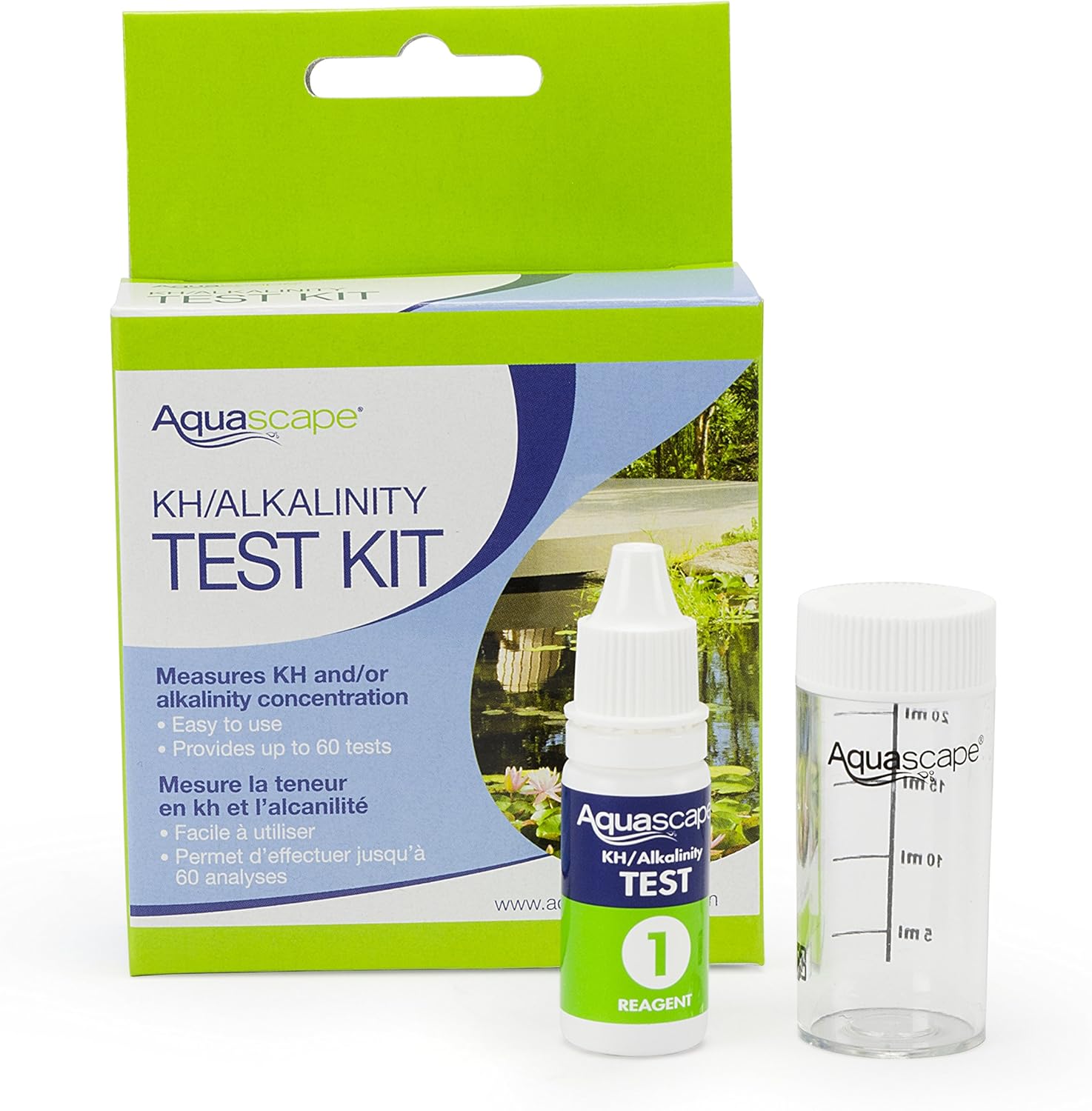
Aquascape 96019 KH Alkalinity review Kit
This 60-review kit measures carbonate hardness, a key water parameter that affects pH stability in ponds and aquariums. It's straightforward to use, providing clear results for hobbyists monitoring their aquatic environment. The kit is particularly useful for optimizing the performance of compatible water treatment systems.
Pros
- Provides up to 60 reviews for ongoing monitoring.
- Includes all necessary components and clear instructions for ease of use.
- Designed for accurate measurement of a critical water quality factor.
Cons
- Primarily beneficial for pond or aquarium setups, offering limited utility for other pet habitats.

BACNUNN 200CT 9-in-1 Aquarium review Strips
This comprehensive water review kit measures nine critical parameters, including pH, nitrates, and chlorine, in both freshwater and saltwater aquariums. Its value pack of 200 strips supports frequent, cost-effective monitoring for dedicated fish keepers. The process is designed for simplicity, requiring just a quick dip and color comparison.
Pros
- reviews nine key water parameters for comprehensive analysis
- Large 200-strip count offers long-term value and frequent evaluation capability
- Simple, three-step process suitable for beginners
- Suitable for both freshwater and saltwater aquarium setups
- Backed by a long history of product development and ISO certification
Cons
- Requires proper storage with a tightly sealed cap to maintain strip viability
- Specific note that total alkalinity measurement is not applicable for saltwater

API Carbonate (KH) review Kit
This dual-purpose kit measures carbonate hardness in both freshwater and saltwater aquariums, as well as tap water. It's a practical tool for hobbyists aiming to prevent dangerous pH swings that can stress fish.
Pros
- reviews both freshwater and saltwater aquariums.
- Includes two kits, offering extended use.
- Comes with a color chart, instructions, and glass tube for straightforward assessment.
- Helps monitor a key parameter for stable aquarium pH.
Cons
- Requires manual evaluation and color matching, which can be subjective.

API Fresh/Salt Carbonate review Kit 3-Count
A liquid review kit designed to monitor carbonate hardness (KH) in both freshwater and saltwater aquariums. This is critical for preventing rapid pH shifts that can stress fish. The pack includes three reviews with a color chart and instructions, offering a straightforward way to assess water stability.
Pros
- Works for both freshwater and saltwater tanks
- Helps identify potential pH instability to prevent fish stress
- Includes a clear color chart and instructions for ease of use
- Pack of 3 provides multiple reviews
Cons
- Requires manual evaluation and color matching, which can be subjective

AESCULIX 8-in-1 Pool review Strips, 151 Count
This comprehensive 151-strip kit assesses eight key water parameters, including chlorine, bromine, pH, and alkalinity. It's designed for routine monitoring in pools, spas, and hot tubs, offering a straightforward dip-and-read process for consistent water quality management.
Pros
- reviews eight critical water parameters with a single strip
- Large supply of 151 strips for frequent, long-term monitoring
- Suitable for various water features including pools and hot tubs
- Simple process requiring no additional equipment
Cons
- Lower average user rating may indicate potential inconsistencies
- Results depend on user interpretation of the color chart

API 5-in-1 Aquarium review Strips (25-Count)
These strips offer a quick and convenient way to monitor five key water parameters in both freshwater and saltwater aquariums. They help prevent common problems by allowing aquarists to regularly assess water quality.
Pros
- reviews five critical water parameters simultaneously
- Simple dip-and-read process suitable for beginners
- Designed for use in both freshwater and saltwater tanks
Cons
- Color-based results can be subjective and harder to read precisely compared to liquid review kits
- Single 25-count pack may require frequent re-purchase for regular weekly evaluation

SJWAVE 11-in-1 Aquarium review Strips, 150 Strips
This comprehensive review kit offers a convenient way to check 11 key water parameters at home. It includes an extensive supply of strips for long-term monitoring and is suitable for both freshwater and saltwater aquariums.
Pros
- reviews 11 key water parameters including ammonia, pH, nitrate, and nitrite
- Includes a large quantity of 150 strips for extended use
- Suitable for both freshwater and saltwater aquarium setups
- Packaging design helps maintain strip freshness for accuracy
- Comes with a helpful instructional eBook for aquarium care
Cons
- Requires strips to be used within three months of opening for best results

DROPLYTIX Digital 10-in-1 Aquarium Water review Kit
An app-enabled review kit that replaces confusing color charts with digital scanning. It assesses 10 key water parameters, including pH, ammonia, and nitrates, for both freshwater and saltwater tanks. It's designed for aquarists seeking a straightforward way to monitor water quality.
Pros
- App-based analysis eliminates subjective color matching for more consistent results.
- reviews a comprehensive set of 10 parameters crucial for most aquarium types.
- Compatible with a wide range of tank setups, from small betta bowls to reef systems.
Cons
- Requires a smartphone and the dedicated app to function, adding a layer of tech dependence.
- Relies on a limited supply of physical review strips that must be repurchased.

Nexahol 8-in-1 Freshwater Aquarium review Strips
These 50-count strips offer a consolidated way to check eight key freshwater parameters, including ammonia. The dip-and-compare method is designed for straightforward, routine home monitoring in tanks for bettas, goldfish, or shrimp.
Pros
- reviews eight crucial water parameters with a single strip, including ammonia, nitrite, and nitrate.
- Fast results with a simple color comparison chart for easy reading.
- Includes 50 strips in a sealed, moisture-resistant bottle for storage.
- Suitable for a wide range of freshwater setups, from betta tanks to planted aquariums.
Cons
- Designed exclusively for freshwater aquariums, not for saltwater systems.
- Results rely on accurate color matching by the user, which can be subjective.
Best Gh Kh Test Kits Buying Guide for 2026
Test Type: Liquid Kits vs. Test Strips
The first major decision is choosing between liquid drop test kits and test strips. Liquid kits, like the API GH & KH TEST KIT, are generally considered more accurate and precise for measuring specific parameters like GH and KH. They involve adding a precise number of drops to a water sample until a color change occurs, giving you a quantifiable result. This method is ideal for serious hobbyists, breeders, or those with sensitive species like discus or shrimp that require very stable, specific water hardness levels. The process takes a bit more time but provides reliable data for critical adjustments.
Test strips, such as the SEAOURA 9-in-1 Aquarium Test Strips, offer unparalleled speed and convenience. You simply dip a strip into the water, wait briefly, and compare the color pads to a chart. They are excellent for quick, routine checks to ensure parameters are within a safe range. Many strips are multi-parameter, testing for GH, KH, pH, nitrates, and more simultaneously. However, they can be less precise than liquid tests and are more susceptible to degradation from humidity if not stored properly. For general monitoring of a community tank, strips are often sufficient, but for dialing in exact values, a liquid kit is superior.
Parameter Range and Specificity
Not all test kits are created equal in what they measure. You need a kit that specifically tests for both General Hardness (GH), which measures calcium and magnesium ions, and Carbonate Hardness (KH), which measures carbonates and bicarbonates that buffer pH. Some basic aquarium test strips may only measure “total hardness,” which is not sufficiently detailed. A dedicated GH/KH kit provides separate readings for each, which is essential because they serve different biological functions. GH is vital for fish metabolic processes and shell/skeleton development in snails and shrimp, while KH acts as a pH stabilizer, preventing dangerous crashes.
Consider the range of measurement the kit offers. Fish from soft water environments like Amazonian tetras need a low GH (1-4 dGH), while African cichlids from hard water lakes require a high GH (10-20 dGH). Your test kit must have a range that covers the needs of your specific livestock. Kits like the Aquascape KH Alkalinity Test Kit are specialized for ponds and high-range measurements, while standard freshwater kits cater to typical aquarium ranges. Always match the kit’s capabilities to your aquarium’s inhabitants.
Ease of Use and Clarity of Results
For consistent testing, the process must be straightforward. Look for kits with clear, step-by-step instructions and distinct color charts. Liquid tests should have easily readable dropper bottles and vials with clear measurement lines. The color change in liquid tests (like from blue to yellow) should be bold and unmistakable. Test strips should have color pads that are well-spaced and a chart with clear incremental values. Ambiguous color matches lead to guesswork and inaccurate readings, defeating the purpose of testing.
Digital and app-enabled kits, such as the Digital Aquarium Water Test Kit from DROPLYTIX, solve the color-matching problem entirely. You scan the strip with your smartphone, and the app provides a digital readout. This technology removes human error in color interpretation and often logs your results over time, which is incredibly helpful for tracking trends. While often at a higher price point, they represent the pinnacle of ease and accuracy for hobbyists who want to eliminate uncertainty from their water testing routine.
Versatility and Tank Type Compatibility
Ensure the test kit you choose is formulated for your type of aquarium. Most kits are designed for freshwater, but some, like the API Fresh/Salt Carbonate Test Kit, are explicitly safe and calibrated for both freshwater and saltwater (marine) use. Using a freshwater-only kit in a reef tank can yield inaccurate results. If you have multiple tanks—a freshwater community tank, a shrimp tank, and a pond—you might prefer a versatile kit that works across all, or you may need separate kits for specialized applications.
Also, consider if you need a kit that tests for more than just GH and KH. For comprehensive weekly checks, a multi-parameter strip that includes ammonia, nitrite, and nitrate alongside hardness can be more efficient and cost-effective. For example, the SJWAVE 11-in-1 Test Strips offer an extensive overview of water quality. However, if GH and KH are your primary concern, a dedicated liquid kit will provide the most reliable data for those specific parameters. Your testing routine and overall aquarium management goals should guide this choice.
Value: Tests per Kit and Long-Term Cost
The upfront price is only part of the equation. Calculate the cost per test to understand the long-term value. A liquid test kit bottle may seem expensive, but it often provides 100-200 tests, making the cost per test very low. For instance, a kit that offers 60 tests for KH, like the Aquascape model, is a workhorse for pond owners. Test strips are sold in counts from 25 to over 200. A bottle of 200 strips, like the BACNUNN Aquarium Test Strips, offers tremendous value for frequent testers.
| Kit Type | Typical Test Count | Best For | Consideration |
|---|---|---|---|
| Liquid GH/KH Kit | 50-150 tests | Precise, dedicated hardness monitoring | Higher accuracy, lower cost per test over time |
| Multi-Parameter Strips | 25-200 strips | Quick, comprehensive weekly checks | Convenience, but may have shorter shelf life |
| Digital/App Kit | Varies (e.g., 25-50 scans) | Eliminating color-matching error, tracking trends | Higher initial investment, requires smartphone |
Also, factor in shelf life. Liquid reagents can expire, and test strips degrade when exposed to air and moisture. Kits with well-sealed bottles or individual foil wrappers for strips, like the NEXAHOL Freshwater Aquarium Test Kit, help preserve their integrity. Buying a massive strip count is only economical if you’ll use them before they lose accuracy. For the casual hobbyist testing once a week, a moderate-sized kit from a reputable brand offers the best balance of freshness and value.
Why You Should Trust Us
Our recommendations are built on a foundation of meticulous research and objective analysis, not on promotional claims. For this guide on best gh kh test kits, we developed a set of criteria based on the fundamental needs of aquarium hobbyists: accuracy, ease of use, versatility, and long-term value. We then systematically compared the specifications, features, and design of 13 leading products. Our process involves analyzing manufacturer data, studying product formulations and intended use, and synthesizing feedback from a wide range of real pet owners across verified retail platforms and aquarium community forums.
We cross-reference this user feedback against the product specifications to identify patterns of reliability, common points of confusion, and real-world performance. Every product featured is scored against our published buying criteria. Our goal is to cut through the marketing and provide you with clear, comparative information so you can select the right GH and KH test kit for your specific aquarium setup and the well-being of your fish, shrimp, or other aquatic pets. Transparency in our methodology is key to helping you make a confident choice.
Final Thoughts
After reviewing 13 top contenders, a few stand out for specific needs. For the aquarist seeking the most reliable and precise measurement for dedicated GH and KH monitoring, the API GH & KH TEST KIT is our best overall pick. Its liquid drop-test method is the gold standard for accuracy among freshwater hobbyists, providing the clear, quantitative data needed to make precise adjustments for sensitive species.
For outstanding value and convenience, the BACNUNN Aquarium Test Strips are an excellent choice. With 200 strips that test for 9 key parameters including GH and KH, the cost per test is minimal, making it ideal for frequent, comprehensive water checks on a budget. For the tech-savvy hobbyist who wants to eliminate guesswork, the Digital Aquarium Water Test Kit is the best for innovation, using smartphone scanning to provide digital results and historical tracking. Whichever you choose, regular testing of GH and KH is one of the most proactive steps you can take for a stable, healthy aquarium. For more guidance on creating the ideal environment, visit our Water Care category.
Frequently Asked Questions
What is the difference between GH and KH in my aquarium?
General Hardness (GH) measures the concentration of calcium and magnesium ions in the water. It’s crucial for the biological functions of fish, including osmoregulation, and is essential for snails and shrimp to build their shells. Carbonate Hardness (KH), also called alkalinity, measures carbonates and bicarbonates. KH acts as a pH buffer, preventing rapid and stressful pH swings. Think of GH as a nutrient and KH as a stabilizer; both are vital for different reasons.
How often should I test my aquarium’s GH and KH levels?
For a established, stable aquarium, testing GH and KH once a week during your regular water change routine is a good practice. You should test more frequently when setting up a new tank, after adding or changing decor (like limestone, which can affect hardness), when introducing new sensitive livestock, or if you notice signs of fish stress. If you’re actively trying to raise or lower your hardness for specific species, you may need to test daily until the desired level is achieved and stable.
Are liquid test kits really better than test strips?
Liquid test kits are generally considered more accurate and precise for measuring specific parameters like GH and KH because they use a titration method that gives a quantitative result (e.g., drops counted). Test strips are faster and more convenient for getting a general range and checking multiple parameters at once, but they can be less precise and more subjective when matching colors. For critical adjustments or with very sensitive animals, a liquid kit is recommended. For routine monitoring, quality test strips are often perfectly adequate.
My KH is very low but my GH is high. What does this mean?
This indicates your water has plenty of calcium and magnesium (high GH) but lacks carbonate buffers (low KH). This is an unstable situation commonly called “old tank syndrome.” The pH can crash suddenly because there’s nothing to neutralize acids produced by fish waste and decomposition. You need to raise your KH using a commercial buffer or additives like baking soda (sodium bicarbonate) specifically formulated for aquariums, to stabilize the pH and protect your fish from dangerous swings.
Can I use a best gh kh test kits designed for pools or spas in my fish tank?
No, you should not use test kits designed for pools, spas, or drinking water in your aquarium. These kits, like the AESCULIX pool test strips, are calibrated for different chemical ranges and often test for substances like cyanuric acid or bromine that are irrelevant or harmful to aquariums. The color charts and chemistry are not designed for the delicate balance of an aquatic ecosystem. Always use test kits specifically marketed for freshwater or saltwater aquariums to ensure accurate readings and the safety of your fish. For other pet care essentials, check out our guide on the best dog DNA tests.
About the author

The Pets Viora Editorial Team researches, writes, fact-checks, and updates every buying guide on Pets Viora. We cover products for dogs, cats, fish, birds, reptiles, small pets, horses, and backyard poultry, and every guide starts with the animal and the problem it needs to solve, not with a best-seller list. Our recommendations are based on product specifications and sizing, safety information and recalls, and recurring patterns in feedback from real owners across multiple sources, scored against the criteria published on our How We Rank page. Brands can't pay for placement, and our guides are general information, not veterinary advice. Questions, corrections, or product suggestions: [email protected]