6 Best Substrate For Cichlids of 2026 – Expert Picks
Finding the best substrate for cichlids can transform your aquarium's health and aesthetics. We researched 6 top substrates in November 2026 from trusted brands like CaribSea, Aqua Natural to help you create the perfect environment for your cichlids.
 By Pets Viora Editorial Team
Updated October 2, 2026
Choosing the right foundation for your cichlid aquarium is one of the most important decisions you’ll make as an aquarist. The substrate does far more than just look good; it influences water chemistry, supports beneficial bacteria, and can even affect your fish’s natural behaviors and coloration. In this comprehensive guide for 2026, we’ve done the heavy research for you, analyzing 6 of the leading substrates on the market. Whether you’re setting up a new tank for African cichlids or looking to upgrade your current setup, selecting from the best substrate for cichlids is crucial for mimicking their natural rift lake habitats and maintaining the high pH levels they thrive in. For more tips on creating an ideal aquatic environment, explore our Fish & Aquariums category.
Our analysis focuses on substrates that specifically cater to the unique needs of cichlids, particularly those from Africa’s Great Lakes. These fish require stable, alkaline water conditions, and the wrong substrate can lead to constant pH battles. We’ve compared key factors like buffering capacity, grain size, material purity, and overall value to bring you a selection that promises both a beautiful aquascape and a healthy, stable ecosystem for your prized fish. Let’s dive into our top picks for November 2026.
| Award | Product | Viora Score About Viora ScoreThe Viora Score is our own 0–10 rating based on performance, safety, durability, pet comfort, and value. It reflects independent research and is never influenced by brands or affiliate commissions. Learn more › | |
|---|---|---|---|
| Best Overall |
 Aqua Natural Oolitic Aragonite Aquarium Sand, 20lb |
8.8/10 | Buy |
| Best Premium |
 CaribSea ACS00223 African Ivory Coast Sand |
8.6/10 | Buy |
| Best Budget |
 Aqua Natural ARAGAF010 Aragonite Sand |
8.4/10 | Buy |
| Best Value |
 Aqua Natural ARAGAF020 Aragonite Aquarium Sand |
8.4/10 | Buy |
 CaribSea Eco-Complete African Cichlid Substrate |
8.4/10 | Buy | |
 CaribSea Eco-Complete 20lb African Cichlid Sand |
8.4/10 | Buy |
Aqua Natural Oolitic Aragonite Aquarium Sand, 20lb
This high-purity substrate, harvested from the Bahamas, is designed to naturally buffer saltwater and African Cichlid tanks to a stable pH of 8.2. Its fine grain structure and immense surface area support a robust biological filter. It's a straightforward choice for aquarists seeking a chemically stable foundation for reef or marine setups.
Pros
- Naturally buffers and maintains a stable pH of 8.2 without added chemicals
- 98% pure calcium carbonate composition with no harmful impurities
- Extremely high surface area per kg promotes beneficial bacterial growth
- Sustainable, pure source from the Bahamas with exclusive harvesting rights
- Versatile grain size suitable for various aquarium systems
Cons
- Fine particle size can cause significant initial cloudiness in the tank
- Requires careful, slow water addition during setup to minimize disturbance
CaribSea ACS00223 African Ivory Coast Sand
This white aquarium sand is formulated to help maintain stable pH levels, particularly in African Cichlid tanks. Its fine, natural look is a popular choice for recreating authentic aquatic environments.
Pros
- Helps resist downward pH drift in established or crowded aquariums.
- Designed to recreate authentic environments, particularly for African Cichlids.
- High customer rating suggests good satisfaction among users.
Cons
- Care instructions specify hand wash only, which may be inconvenient for some.
- Material is listed as cotton, which seems inconsistent for a sand substrate.
Aqua Natural ARAGAF010 Aragonite Sand
This sustainably sourced, phosphate-free sand is specifically formulated for African Cichlid and marine aquariums. Its high-purity, oolitic aragonite composition naturally buffers water to a stable pH of 8.2, reducing the need for chemical additives. The fine grain structure provides an extensive surface area to support beneficial bacteria for a healthy tank environment.
Pros
- Naturally buffers and maintains a stable pH of 8.2 without constant chemical use
- High-purity (98% calcium carbonate), phosphate-free composition for clean water
- Fine, oolitic grain structure provides vast surface area for beneficial bacteria
- Sustainably sourced from the Bahamas and free from harmful tar or organics
- Versatile substrate suitable for marine, reef, and African Cichlid setups
Cons
- The 10-pound weight and fine grain may make initial tank setup and cleaning a more involved process
Aqua Natural ARAGAF020 Aragonite Aquarium Sand
A premium marine-grade sand sourced from The Bahamas, this aragonite substrate is particularly valued for African Cichlid and reef aquariums. Its high-purity composition naturally buffers water to maintain a stable pH of 8.2, while the fine, oolitic grain structure provides an extensive surface area for beneficial bacteria.
Pros
- Naturally buffers aquarium water to a stable pH of 8.2, reducing need for chemical additives.
- High-purity, oolitic sand provides a massive surface area for beneficial nitrifying bacteria.
- Sustainably sourced and free from harmful tar, organics, or impurities.
- Ideal grain size for various setups including reef tanks and plenum systems.
CaribSea Eco-Complete African Cichlid Substrate
This live sand is formulated specifically for African Cichlid aquariums. It naturally buffers the water to maintain a high pH and comes pre-packed with beneficial bacteria to help establish a healthy biological cycle in a new tank.
Pros
- Specifically engineered for the high-pH water conditions preferred by African Cichlids
- Contains live bacteria to assist in cycling new aquariums, potentially speeding up the setup process
- A complete, ready-to-use substrate that requires no pre-washing
Cons
- The 'stick' item form may be less conventional and require a specific application method compared to loose sand
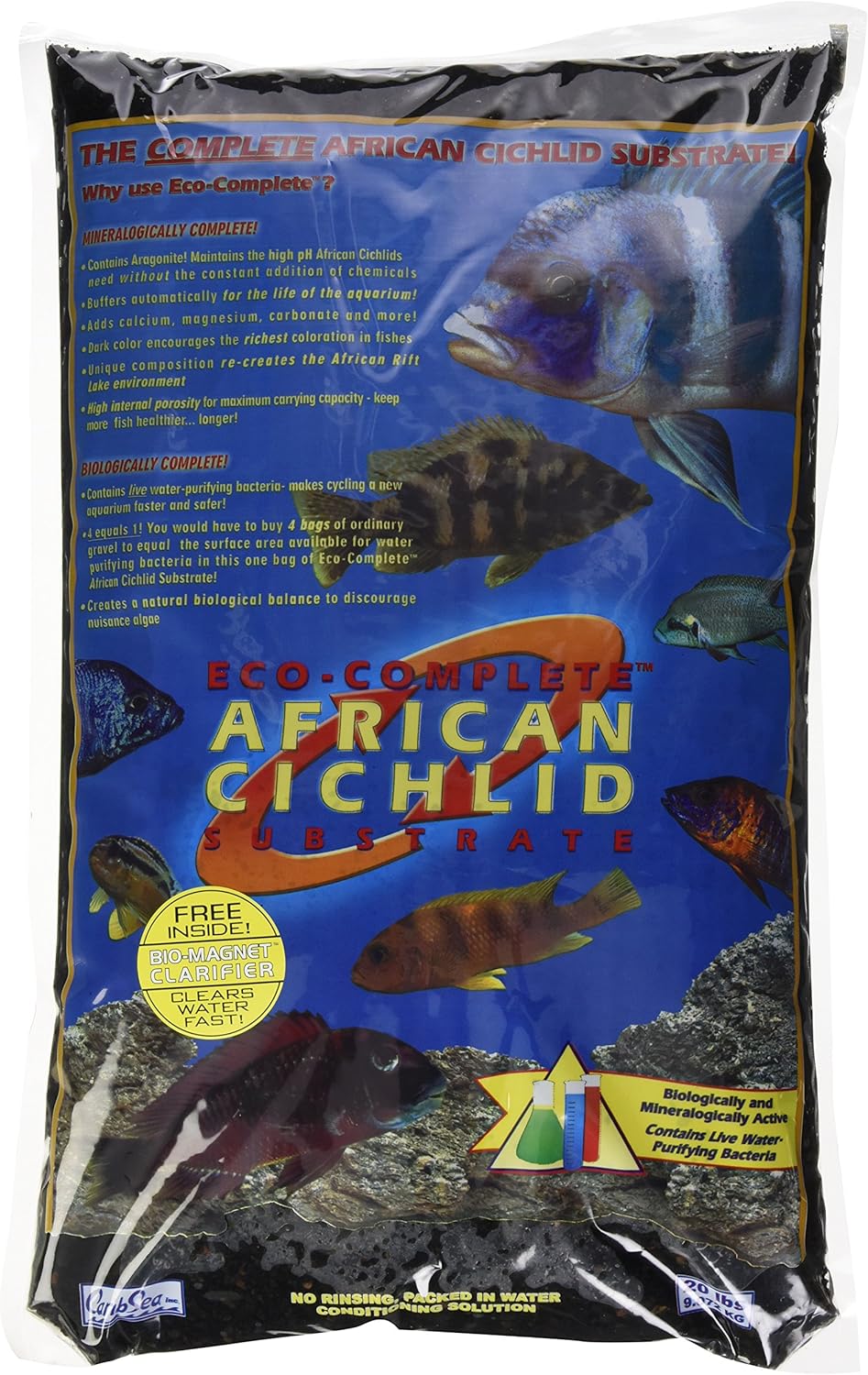
CaribSea Eco-Complete 20lb African Cichlid Sand
This mineral-rich substrate is engineered for African Cichlid aquariums, automatically buffering pH and adding essential minerals. Its live bacteria formula helps cycle new tanks quickly, and it requires no rinsing, making setup straightforward for dedicated fishkeepers.
Pros
- Buffers and maintains high pH levels ideal for African Cichlids.
- Contains live, water-purifying bacteria to speed up tank cycling.
- No rinsing required; packed in a water-conditioning solution.
- Adds calcium, magnesium, and carbonate to the water column.
- Recreates a natural African Rift Lake environment.
Cons
- Not a pure, fine sand; it's a gravel mix with varied colors and grain sizes.
- Can create significant cloudiness when first added to water, though it typically clears.
Best Substrate For Cichlids Buying Guide for 2026
Buffering Capacity and pH Stability
For African cichlids, maintaining a stable, high pH (typically between 7.8 and 8.6) is non-negotiable. The primary role of a specialized cichlid substrate is to act as a buffer, resisting the natural tendency of aquarium water to become more acidic over time. This buffering is usually provided by calcium carbonate-based materials like aragonite or crushed coral. When evaluating the best substrate for cichlids, look for products that explicitly state their ability to maintain a specific pH, such as 8.2. Substrates like the Aqua Natural Aquarium Sand, Oolitic Aragonite are renowned for their “unsurpassed buffering capability.” This eliminates the need for constant chemical additives, creating a more natural and stable environment. A good substrate will buffer automatically for the life of the aquarium, adding essential minerals like calcium and magnesium back into the water column as needed.
The effectiveness of a buffer depends on its composition and surface area. Pure oolitic aragonite, sourced from places like The Bahamas, is often over 98% calcium carbonate, making it highly effective. The small, egg-shaped grains provide an enormous surface area for beneficial, pH-stabilizing bacteria to colonize. When researching, we prioritize substrates that offer this long-term, chemical-free stability. It’s a foundational element that supports not just water chemistry, but also the biological filtration crucial for a healthy tank. A stable pH reduces stress on your cichlids, leading to better coloration, more natural behavior, and improved overall health.
Grain Size and Substrate Composition
The physical texture and size of the substrate grains are critical for both the aquarium’s function and your cichlids’ well-being. Cichlids, especially mbuna from Lake Malawi, are notorious diggers and sifters. A substrate that is too coarse or sharp can damage their delicate gills and barbels. The ideal best substrate for cichlids features smooth, rounded grains. Oolitic aragonite sands are perfect for this, as their name (“oolitic” meaning egg-shaped) describes their smooth, polished texture. This allows fish to sift through the sand safely while foraging for food. Conversely, substrates that are too fine, like powder sand, can compact and create anaerobic pockets that release harmful gases.
Composition goes beyond just texture. You must consider the material’s purity. Substrates should be free from impurities, dyes, or coatings that could leach into the water. High-purity calcium carbonate is the gold standard. Additionally, some substrates, like the CaribSea Eco-Complete African Cichlid line, are “biologically complete,” meaning they come packed with live, nitrifying bacteria to help instantly cycle a new tank or boost the biological filtration in an established one. This can be a huge advantage when setting up a new habitat quickly and safely. The grain size also affects plant rooting if you choose to include hardy species, and it influences how waste sits on the surface versus sinking, impacting your cleaning routine.
Color and Aesthetic Impact
While health and chemistry are paramount, the visual appeal of your aquarium is a significant factor for most hobbyists. The color of your substrate can dramatically enhance the natural colors of your cichlids. Light-colored sands, like the ivory or white tones found in Carib Sea ACS00223 African Ivory Coast Sand or Bahamian aragonite, provide a brilliant contrast that makes the blues, yellows, and oranges of African cichlids truly pop. This mimics the bright, sandy bottoms of their native lakes. Darker substrates, such as the black CaribSea Aquatics Eco-Complete African Cichlid Zack Sand, can create a striking, modern look and may help some fish feel more secure, potentially reducing aggression.
Your choice should also consider the overall aquascape you wish to create. A lighter substrate reflects more light, brightening the entire tank, while a dark substrate can make colors appear more saturated and hide detritus slightly better between cleanings. It’s also worth thinking about the long-term appearance; some substrates stay cleaner-looking than others. The key is to select a color from a reputable brand that also meets all the chemical and physical criteria, ensuring you don’t sacrifice functionality for aesthetics. A beautiful tank that is also healthy is the ultimate goal for any aquarist seeking the best substrate for cichlids.
Bag Size, Depth, and Tank Calculation
Purchasing the correct amount of substrate is essential. A common guideline is to aim for a depth of 1 to 2 inches (2.5 to 5 cm) for most cichlid setups. This provides enough material for buffering, allows for natural digging behavior, and supports plant roots if applicable. To calculate how many pounds you need, a general rule is 1 to 1.5 pounds of substrate per gallon of tank water, depending on the desired depth and the substrate’s density. For a standard 55-gallon cichlid tank, you would likely need between 55 and 80 pounds. Most substrates, like those in our review, come in 10, 20, or 40-pound bags.
| Tank Size (Gallons) | Substrate Depth (Inches) | Estimated Weight Needed (Pounds) | Common Bag Combination |
|---|---|---|---|
| 20 | 1.5 | 25-30 | 1 x 20lb + 1 x 10lb |
| 55 | 2 | 70-85 | 2 x 40lb or 4 x 20lb |
| 75 | 2 | 95-115 | 3 x 40lb |
| 125 | 2 | 150-190 | 4 x 40lb + 1 x 20lb |
It’s always wise to buy a little extra to account for settling and future adjustments. Consider the footprint of your tank as well; a long, shallow tank will require a different calculation than a tall, narrow one. Planning this out before you buy prevents multiple trips to the store or waiting for additional shipments. For advice on other essential aquarium accessories, from filtration to décor, our Aquarium Accessories page is a great resource.
Initial Preparation and Long-Term Maintenance
Even the best substrate for cichlids requires proper preparation before being added to your tank. While many aragonite sands are pre-washed, it is always recommended to rinse the substrate thoroughly in a bucket with clean water (not soap) until the water runs clear. This removes fine dust particles that would otherwise cloud your tank for days. For “live” substrates containing bacteria, follow the manufacturer’s instructions carefully, as rinsing could remove the beneficial microbes. When adding the substrate to an established tank with fish, do so gently to avoid disturbing the inhabitants or creating a major debris storm.
Long-term maintenance is relatively straightforward. During weekly water changes, use a gravel vacuum to clean the surface of the substrate, removing uneaten food and waste. Be careful not to dig too deeply, especially in the first few months, to avoid disturbing the established bacterial colonies within the substrate bed. One of the advantages of a high-quality buffering substrate is that it reduces the need for constant pH monitoring and chemical adjustments. However, you should still test your water parameters regularly to ensure the buffering capacity remains effective. Over many years, the buffering minerals will eventually deplete, but a quality substrate should last for several years before needing replacement.
Why You Should Trust Us
Our recommendations are the result of a meticulous, data-driven research process designed to provide you with objective and reliable information. We do not rely on single sources or manufacturer claims alone. Our methodology involves a comprehensive comparison of product specifications, chemical compositions, and material sourcing. We analyze detailed product descriptions, technical data sheets, and safety information to understand exactly what each substrate offers and how it claims to function in a cichlid aquarium.
Furthermore, we synthesize feedback from a wide array of real aquarists and pet owners. By examining reviews, forum discussions, and feedback from multiple retailer sites, we identify common praises and consistent issues reported by people who have actually used these products in their home aquariums over time. This owner-based perspective is invaluable for understanding real-world performance, ease of use, and long-term satisfaction. Finally, we score and rank products against our published criteria focused on cichlid health, water chemistry stability, safety, and overall value, ensuring our picks are balanced and transparent.
Final Thoughts
After researching the leading options for 2026, we have clear recommendations for different needs. For the Best Overall Best Substrate For Cichlids, the Aqua Natural Aquarium Sand, Oolitic Aragonite stands out. Its exceptional purity from The Bahamas, proven buffering capability to maintain a stable pH of 8.2, and smooth, oolitic grain structure make it an ideal, all-purpose foundation that closely replicates the natural cichlid environment. It supports both water chemistry and biological filtration effectively.
For aquarists seeking the Best Value, the Aqua Natural Aquarium Substrate, African CICHILD Aragonite Sand, 10LB offers the core benefits of high-purity, buffering aragonite at a very accessible entry point. It’s a fantastic choice for smaller tanks or for those who want to try a premium substrate without a major initial investment. If you are looking for a substrate with Added Biological Benefits for a new tank setup, the CaribSea Eco-Complete African Cichlid Substrate is an excellent pick. Its inclusion of live, nitrifying bacteria can help establish a healthy nitrogen cycle faster, providing a head start on biological filtration while also offering reliable pH buffering. For more product insights tailored to pet owners, check out our guide on the 6 Best Dog Cameras of 2026.
Frequently Asked Questions
What is the best substrate for cichlids in 2026?
Based on our November 2026 research, the best overall substrate for cichlids is a high-purity, oolitic aragonite sand, such as Aqua Natural’s offering from The Bahamas. It provides excellent long-term buffering to maintain the high pH African cichlids require, has smooth grains that are safe for digging fish, and supports beneficial bacteria. The “best” choice can vary slightly depending on whether you prioritize instant biological cycling, a specific color, or budget, but a quality aragonite sand is the most reliable foundation.
How deep should the substrate be in a cichlid tank?
A substrate depth of 1 to 2 inches is generally recommended for cichlid aquariums. This provides enough material for effective buffering of the water chemistry and allows cichlids, particularly mbuna, to exhibit natural digging and sifting behaviors. A depth greater than 2 inches in areas can be used for aesthetic contouring but is not necessary for function and may risk creating anaerobic pockets if not maintained.
Do I need to replace my cichlid substrate regularly?
No, a high-quality buffering substrate like aragonite or specialized cichlid mixes should not need regular replacement. These substrates are designed to dissolve slowly, releasing minerals and buffering the pH for years. You should only need to replace it if it becomes excessively dirty beyond cleaning, if the buffering capacity is fully depleted (which takes a very long time), or if you wish to change the aesthetic of your tank. Routine vacuuming during water changes is sufficient for maintenance.
Can I use regular aquarium gravel for cichlids?
It is not recommended. Standard aquarium gravel typically does not have the buffering capacity required to maintain the high, stable pH (7.8-8.6) that African cichlids need. Using inert gravel would require you to constantly monitor and adjust pH with chemicals, which is less stable and more labor-intensive. Additionally, the hard, often sharp edges of some gravel can be harmful to cichlids that dig and sift through the substrate with their mouths.
How do I clean a new cichlid substrate before adding it to my tank?
Place the substrate in a large bucket and rinse it repeatedly with clean tap water, agitating it with your hand. Pour out the cloudy water and repeat until the water runs clear. This removes fine dust and prevents cloudiness in your aquarium. Important exception: Do not rinse “live” substrates that contain beneficial bacteria (like some CaribSea Eco-Complete products), as this will wash the bacteria away. For those, follow the package instructions precisely.
About the author

The Pets Viora Editorial Team researches, writes, fact-checks, and updates every buying guide on Pets Viora. We cover products for dogs, cats, fish, birds, reptiles, small pets, horses, and backyard poultry, and every guide starts with the animal and the problem it needs to solve, not with a best-seller list. Our recommendations are based on product specifications and sizing, safety information and recalls, and recurring patterns in feedback from real owners across multiple sources, scored against the criteria published on our How We Rank page. Brands can't pay for placement, and our guides are general information, not veterinary advice. Questions, corrections, or product suggestions: [email protected]